
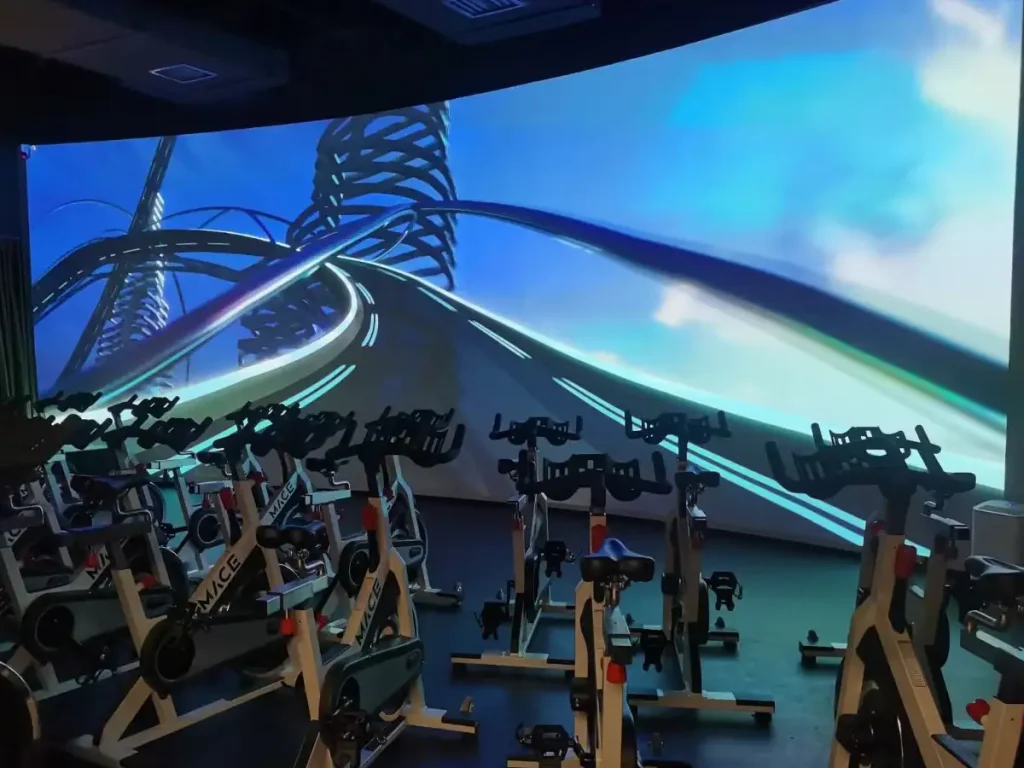
OEM spin bike manufacturing involves much more than welding a steel frame. A production-ready program must coordinate material preparation, precision tube processing, permanent component identification, controlled welding, surface finishing, assembly, inspection, and export packing. Each stage affects whether the finished bikes can be assembled smoothly and remain consistent across a production batch.
Stable volume manufacturing depends on standardized procedures, appropriate automation, reliable fixtures, and process quality control. When these elements work together, they help control dimensional variation, welding deformation, coating appearance, component fit, and delivery risk. This article follows a real manufacturing flow from raw steel preparation to finished spin bikes ready for international shipment.
Key Challenges in OEM Spin Bike Manufacturing
Spin bike frames combine multiple tubes, welded joints, adjustment components, brackets, and finished assemblies. Small variations at an early stage can create larger problems later. Inconsistent tube lengths or profiles can affect fixture positioning. Variable weld placement may change frame geometry, while uncontrolled heat input can contribute to deformation. These issues can make later installation of adjustment mechanisms, covers, seats, handlebars, and drive-related components less predictable.
Surface finishing creates another set of requirements. Powder coating needs uniform coverage and a stable appearance, but connection points and assembly areas must remain suitable for downstream work. Buyers also need confidence that adjustment functions, component alignment, overall stability, and appearance remain consistent across a batch rather than only on one approved sample.
Packing is part of the same quality chain. Finished products contain coated surfaces and assembled components that must be protected from movement and impact during handling and international delivery. A controlled manufacturing process therefore needs to address dimensional consistency, weld quality, deformation, coating uniformity, assembly compatibility, batch inspection, and transport protection as connected priorities.
Our OEM Spin Bike Manufacturing Process
1. Raw Material Preparation
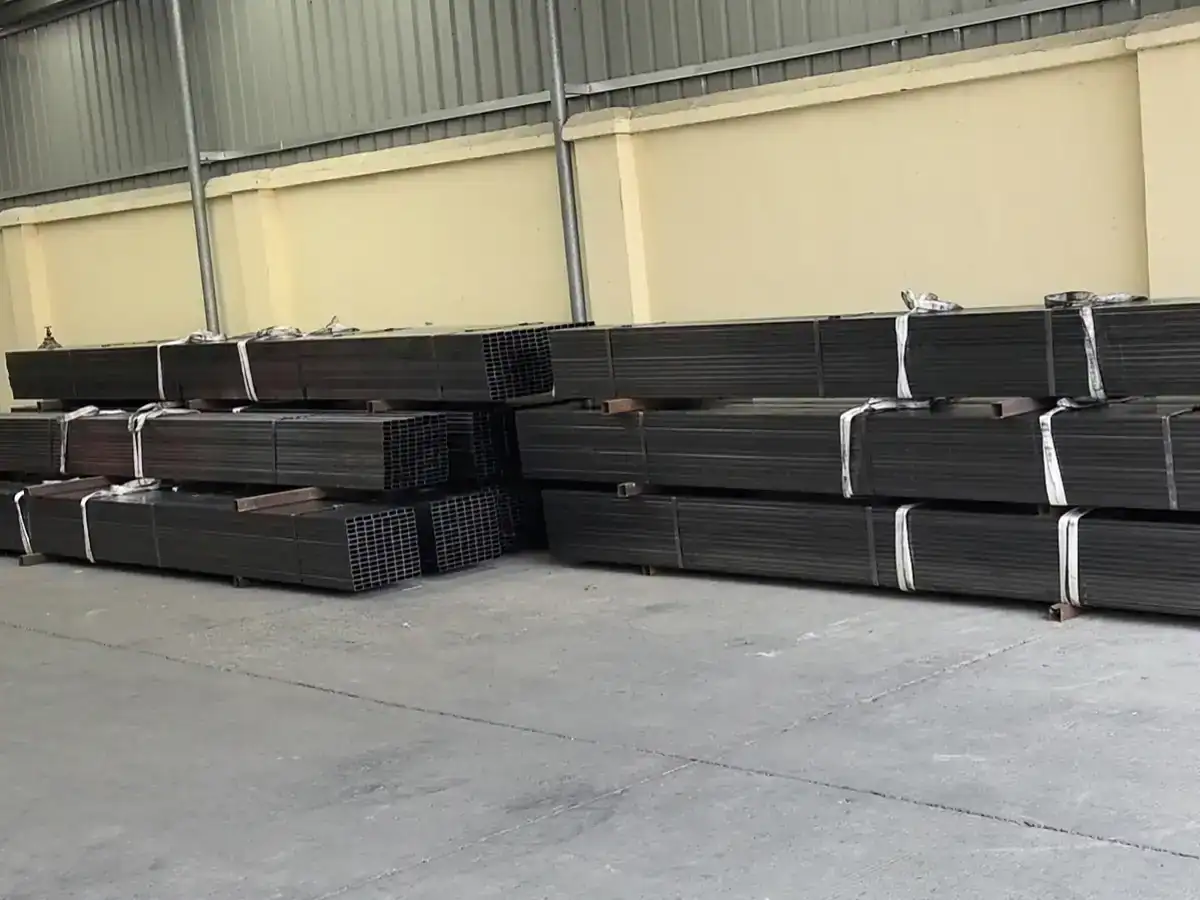
Steel tubes and other metal materials are checked and organized before processing. Materials are grouped according to the required specifications and production batches so operators can reduce mix-ups and keep the manufacturing sequence clear.
This preparation supports dimensional consistency and traceability throughout later operations. It also helps the production team coordinate cutting, marking, welding, and surface treatment without unnecessary material handling. For OEM buyers, disciplined material preparation is an important foundation for repeatable results across multiple finished units.
2. Laser Marking and Component Identification
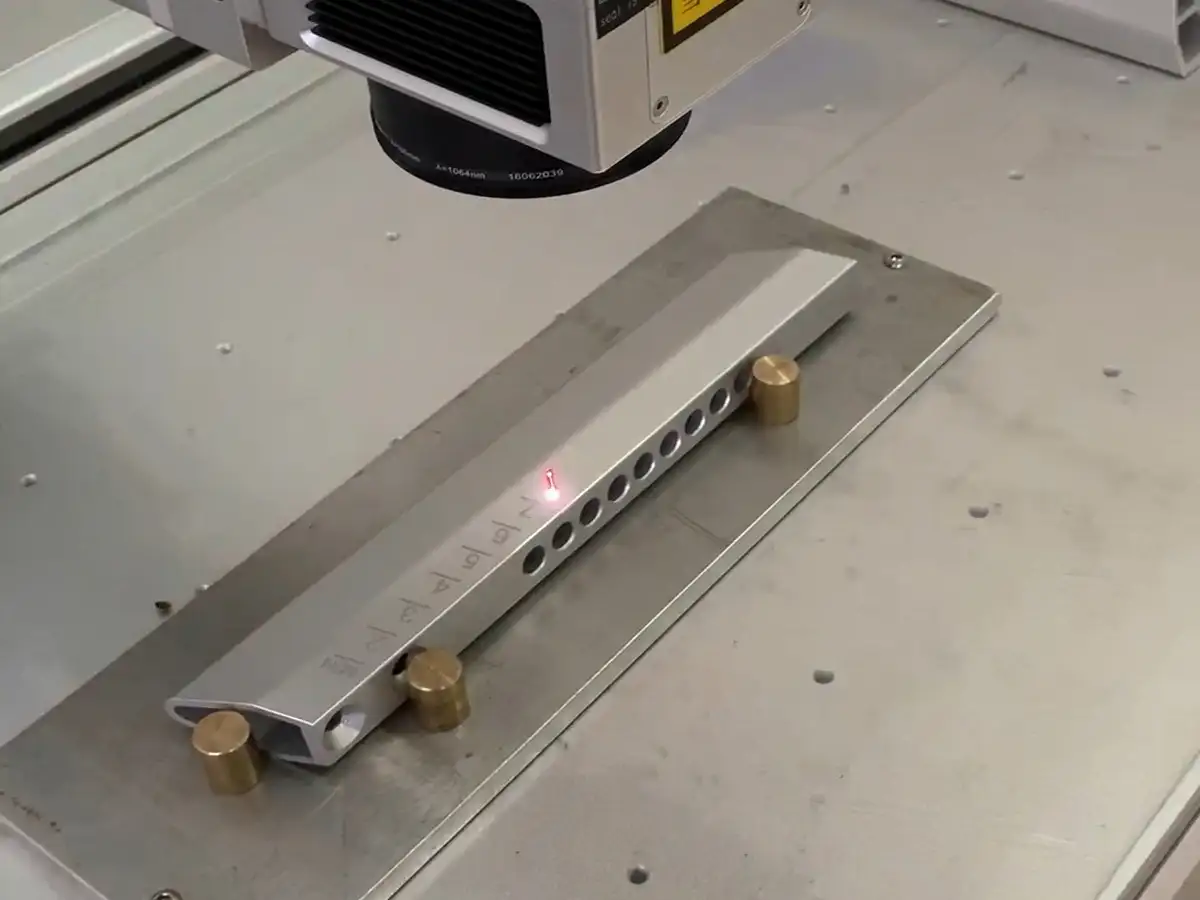
Adjustment components require clear, repeatable reference markings for assembly and end use. Laser marking creates permanent scales and identification details that are more consistent than manual marking methods.
Accurate markings help operators position adjustment parts correctly and help users identify settings over the product’s service life. Standardized identification also supports assembly control and product traceability, especially when similar components pass through production together.
3. Precision Tube Laser Cutting
Steel tubes are processed to create the lengths, profiles, holes, and connection features required by the frame design. Controlled preparation improves fit in welding fixtures and reduces the need for manual correction during assembly. Likai Metal’s laser cutting services support repeatable tube and sheet preparation for downstream fabrication.
The video shows Han’s Laser equipment cutting the tube profiles and connection features used in the frame before fixture loading and welding.
4. Panasonic Robotic Frame Welding
After tube preparation, the frame components are positioned in dedicated fixtures for welding. Stable fixturing helps control part location before heat is introduced, while a planned welding sequence helps limit variation and deformation.
Panasonic robotic welding provides repeatable torch movement and weld placement between units. This consistency supports structural strength, frame geometry, and predictable installation of later components. Likai Metal’s robotic welding services are used where repeated welded assemblies need stable positioning and production rhythm.
The video shows the Panasonic robotic welding cell joining fixtured frame components during batch production.
5. Automatic Powder Coating
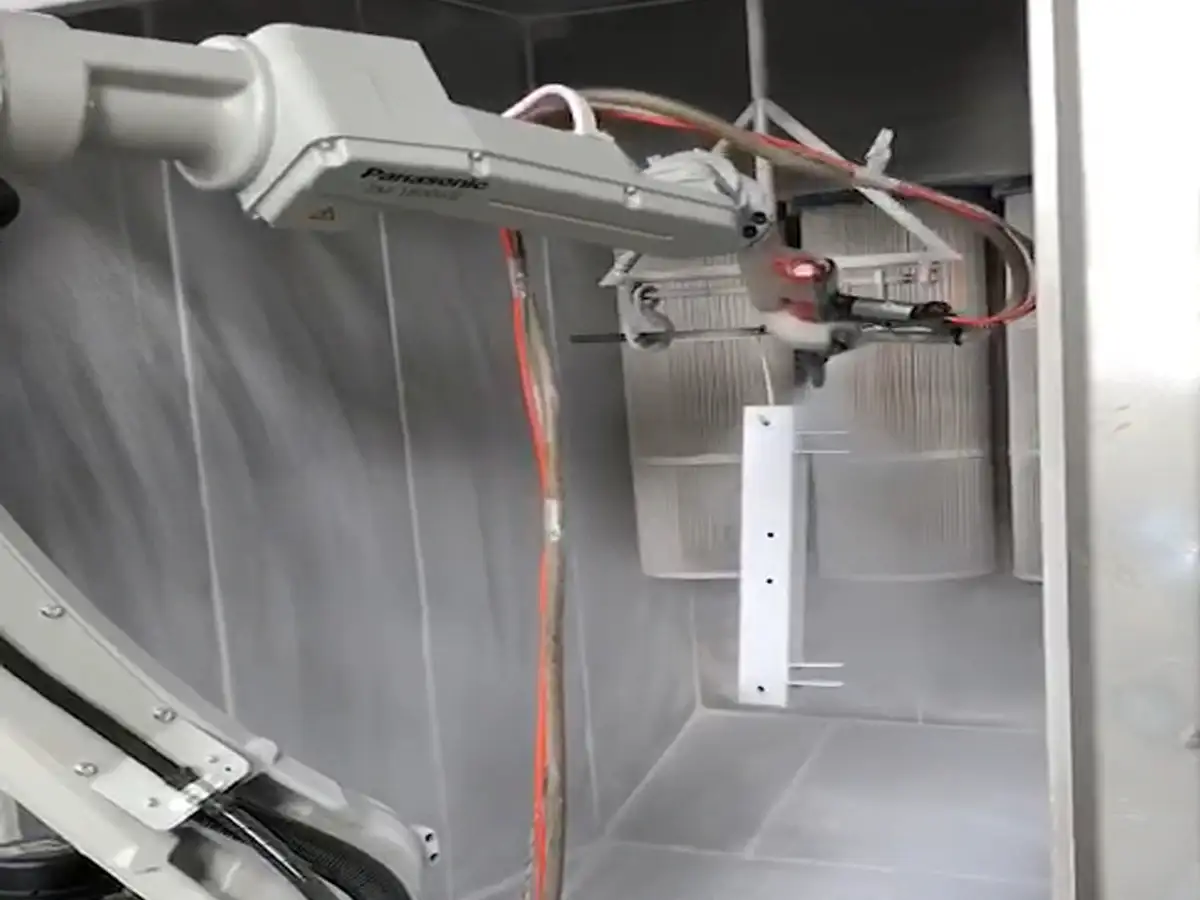
Welded steel components move through surface preparation and powder coating to improve appearance and provide surface protection. Automated coating helps maintain more uniform coverage across complex frame surfaces and repeated production units.
Coating quality must be considered together with final assembly. Connection areas, threaded positions, and component interfaces need to remain suitable for fitting and adjustment. Consistent preparation and coating help support corrosion protection, surface durability, and a professional finished appearance. Our broader manufacturing capabilities coordinate fabrication, finishing, assembly support, and inspection around the product requirements.
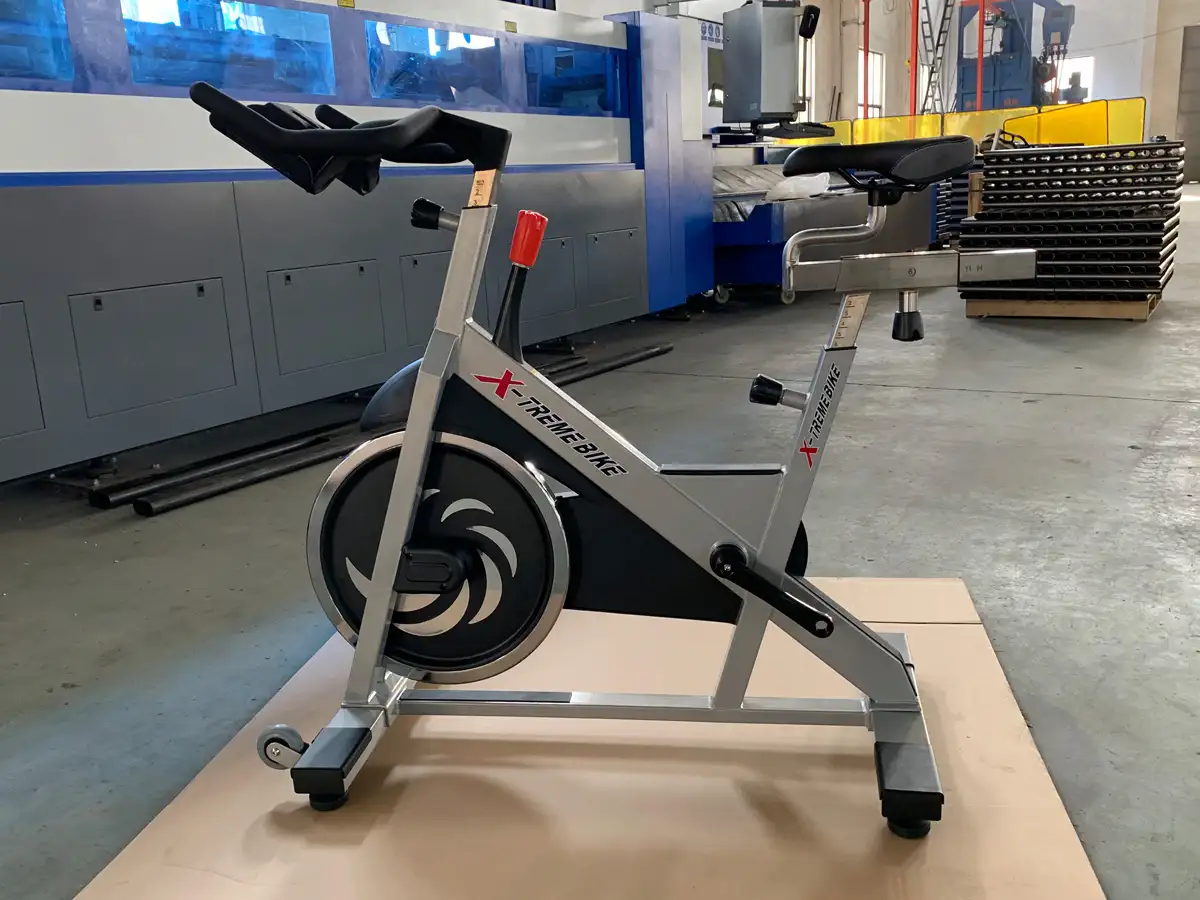
6. Final Assembly and Product Verification
After powder coating, the frame is assembled with the drive system, pedals, seat, handlebars, and adjustment components. The completed unit is checked for component fit, adjustment operation, overall stability, and visible surface condition before batch inspection.
7. Finished Spin Bike Batch Inspection
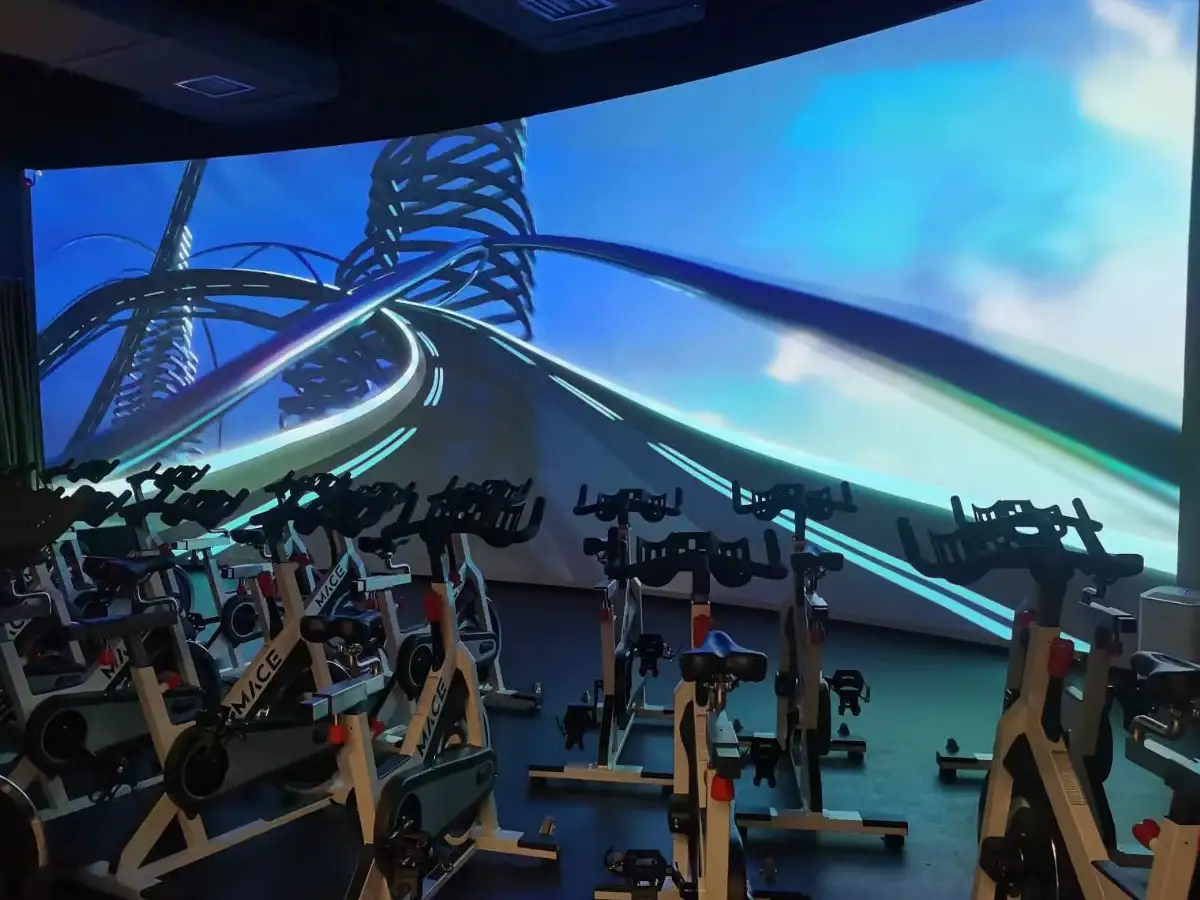
Multiple completed spin bikes are reviewed together during final batch inspection. Adjustment mechanisms, functional operation, component fit, overall stability, and surface appearance are compared across the production batch.
This review helps identify variation before packing and confirms that frames, components, adjustment functions, and finished surfaces remain consistent across the order. It connects manufacturing control with the buyer’s expectations for reliable, repeatable finished equipment.
8. Export Packing and Delivery Preparation
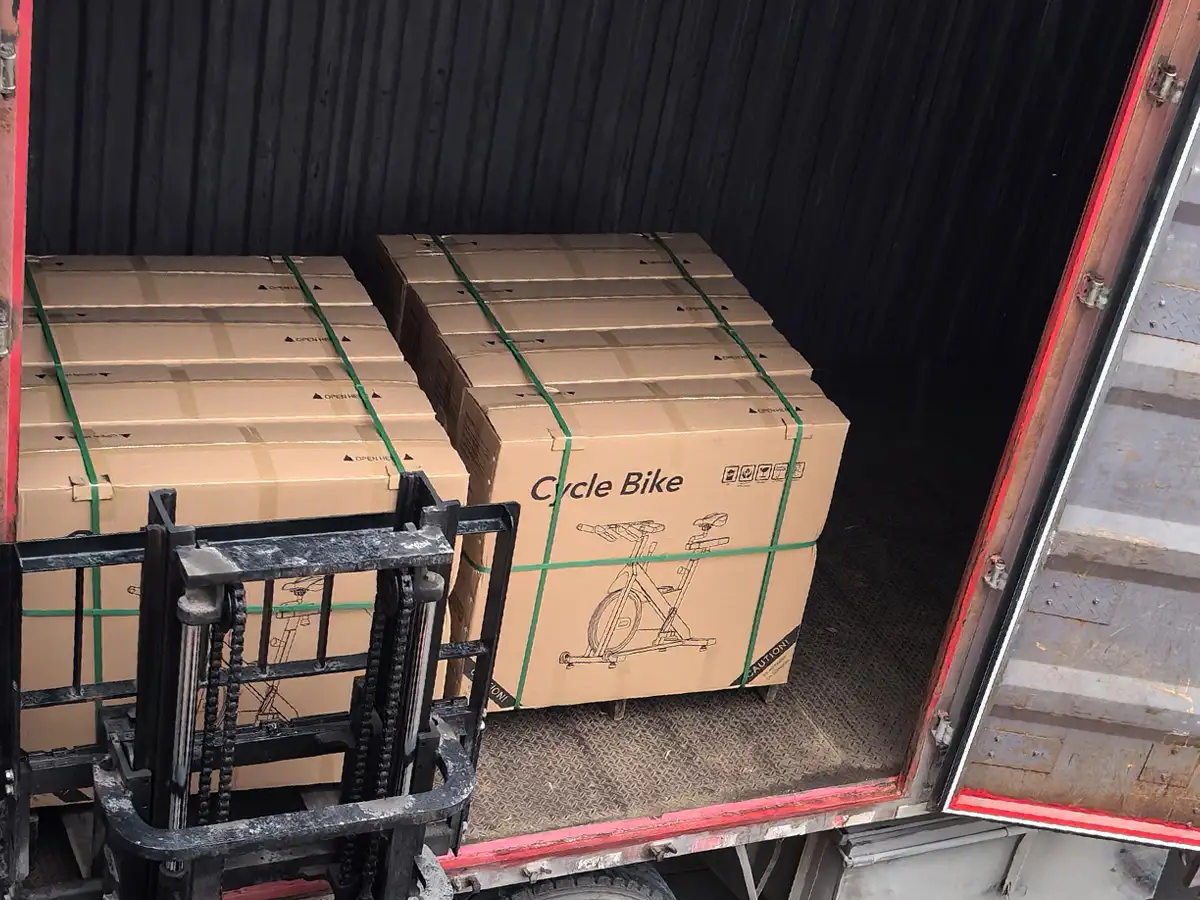
Finished spin bikes are protected before handling and international transportation. Components and contact surfaces are secured to reduce movement, impact, and abrasion during loading and delivery.
Packing is treated as part of final quality control. The production team checks that the finished units are stable, protected, and ready for container loading. Export-ready packing helps ensure that the condition approved at the factory is maintained until the products reach the buyer.
How Automation Improves Batch Consistency
Automation helps reduce process variation when it is applied to suitable production stages. Tube laser cutting provides repeatable profiles and connection features. Laser marking standardizes scales and identification. Robotic welding stabilizes torch paths, weld locations, and production rhythm. Automatic powder coating helps improve surface coverage across repeated components.
Automation alone does not guarantee a stable product. Fixtures must locate parts correctly, input materials must be controlled, and operators must monitor the process. Inspection is also needed between stages so that a cutting, welding, coating, or assembly issue is identified before it affects the entire batch. The practical advantage comes from combining automated equipment with controlled parameters, appropriate fixtures, organized production, and quality checks.
Quality Control Before Export
Quality control is integrated throughout production and confirmed again before shipment. Frame dimensions and geometry are reviewed to support assembly compatibility. Welded areas are checked for consistent placement and visible condition. Adjustment mechanisms are operated to confirm that marked positions, moving parts, and locking functions work as intended.
The coating is reviewed for coverage, appearance, and condition around assembly interfaces. Completed bikes are checked for component fit, overall stability, and readiness for packing. Finally, the packing condition is inspected to confirm that finished surfaces and assemblies are protected for transportation.
These checks focus on practical manufacturing and delivery requirements. They do not replace the buyer’s drawings or agreed specifications; instead, they help verify that the production result remains aligned with them.
Why OEM Buyers Need a Controlled Manufacturing Process
A successful prototype shows that a design can be built, but it does not automatically guarantee stable batch production. OEM buyers need a supplier that can repeat the cutting, marking, welding, finishing, assembly, inspection, and packing process across the order.
Controlled manufacturing reduces the risk of rework, difficult assembly, inconsistent adjustment, visible coating differences, and preventable shipping damage. It also makes production communication clearer because the buyer and manufacturer can review each stage against the drawing, material, surface finish, and quality requirements. Examples of other controlled manufacturing workflows are available in our Projects section.
Conclusion
Likai Metal supports OEM spin bike manufacturing through tube laser cutting, robotic welding, powder coating, final assembly, inspection, and export packing. We turn customer drawings and production requirements into a practical manufacturing route focused on repeatable quality, batch consistency, and export readiness.
Frequently Asked Questions
Can you manufacture custom spin bike frames from customer drawings?
Yes. We can evaluate custom spin bike frames and related metal assemblies based on customer drawings and production requirements. The review considers material, manufacturability, welding, finishing, assembly, inspection, and packing needs before a production route is confirmed.
What files are required for an OEM spin bike quotation?
Please provide 2D drawings and, when available, 3D STEP files. The drawings should identify the material, key dimensions, tolerances, and surface-finish requirements needed for manufacturability review.
How does robotic welding improve spin bike frame consistency?
Robotic welding provides repeatable torch movement, welding positions, and production rhythm. When it is combined with stable fixtures and controlled welding sequences, it helps reduce variation between frames and supports more predictable downstream assembly.
Can you support powder coating and final product assembly?
We can evaluate projects that require powder coating coordination and final assembly support. The exact scope depends on the product design, component supply arrangement, surface finish specification, inspection requirements, and packing plan.
What information should buyers provide before production evaluation?
In addition to the drawings, please provide the target quantity, required assembly scope, quality expectations, packing method, and delivery requirements. This information helps us evaluate the production route and identify manufacturing risks before production.
Planning a Custom Spin Bike or Fitness Equipment Project?
Send us your 2D drawings, 3D STEP files, material specification, target quantity, tolerance requirements, surface finish, packing requirements, and quality expectations. Our team will review the manufacturing route and provide practical production feedback.