
Build to print vs build to spec is an important sourcing decision for OEM buyers. Both models can be used for custom metal parts, but they place design responsibility, engineering input, and supplier risk in different places.
For OEM metal parts, build-to-print manufacturing means the buyer provides detailed drawings and the supplier produces parts according to the specified dimensions, materials, tolerances, and inspection requirements. Build-to-spec projects usually give the supplier more responsibility to help define the manufacturing approach based on performance, application, and technical requirements.
Before requesting a quote, buyers should clarify whether the project is build-to-print, build-to-spec, or somewhere between the two. Clear drawings, material requirements, tolerance notes, finish requirements, quantity, and inspection standards help reduce misunderstanding and improve quotation accuracy. Send us your drawings and requirements to confirm the right manufacturing approach before production.
For CNC machined parts, laser cut sheet metal, welded frames, brackets, guards, and assemblies, the right model affects quoting speed, production control, cost, inspection, and how changes are approved.
Quick answer
Build-to-print manufacturing means the buyer provides completed drawings, 3D files, tolerances, materials, finishes, and revision requirements. The supplier manufactures the part according to those documents.
Build-to-spec manufacturing means the buyer provides functional requirements or performance targets, and the supplier helps define the design, materials, process, or manufacturing details needed to meet those requirements.
If your drawings are complete, build to print is usually faster and easier to control. If your part design is not finalized, build to spec may be useful because the supplier can help with manufacturability and cost reduction.
Build to print vs build to spec comparison
| Item | Build to Print | Build to Spec |
|---|---|---|
| Main idea | Manufacture exactly according to buyer drawings and specifications. | Develop or refine the solution based on buyer performance requirements. |
| Buyer provides | 2D drawings, 3D files, tolerances, materials, finishes, and revision control. | Application requirements, load, fit, function, environment, target cost, and usage conditions. |
| Supplier role | Review manufacturability, quote, make samples, inspect, and produce to print. | Suggest design, process, material, tolerance, and production method options. |
| Design ownership | Usually controlled by the buyer. | May be shared or developed with supplier input, depending on agreement. |
| Best for | Repeat OEM parts, approved drawings, replacement parts, and controlled production. | New product development, early-stage projects, and parts needing engineering support. |
| Change control | Changes should follow drawing revision updates and buyer approval. | Changes may be part of the development process before final approval. |
What build-to-print manufacturing means
In build-to-print manufacturing, the customer has already defined the part. The supplier is responsible for following the print, checking manufacturability, and producing parts that match the agreed drawings and specifications.
This model is common for OEM metal parts because it keeps the project controlled. Buyers can send the same drawing package to qualified suppliers and compare pricing, lead time, sample quality, and production capability.
A good build-to-print RFQ usually includes 2D drawings in PDF format, 3D files such as STEP or IGES, material grade, finish requirements, tolerance notes, quantity, expected annual demand, inspection requirements, and packing needs.
For a deeper overview, see our related guide: What Is Build-to-Print Manufacturing?
What build-to-spec manufacturing means
Build-to-spec manufacturing starts from a required result instead of a finished print. The buyer may know the function, load, size range, application, or target cost, but the part design may still need engineering decisions.
For example, a buyer may need a metal support frame for automated equipment, but the wall thickness, welding method, hole positions, surface finish, and packing method may still need to be confirmed. In this case, the supplier can provide design-for-manufacturing feedback before production drawings are finalized.
Build to spec can save time when a supplier has strong process knowledge. However, it also needs clear communication about design ownership, approval steps, intellectual property, testing standards, and final documentation.
When to choose build to print
Choose build to print when your team already has approved drawings and the main goal is reliable manufacturing. This is often the best fit for custom metal parts that need repeat production and consistent inspection.
- Your 2D drawings and 3D models are complete.
- Critical dimensions and tolerances are already defined.
- The material grade and surface finish are known.
- You need samples or production parts made to an existing revision.
- You want easier supplier comparison during sourcing.
Build to print is especially useful for CNC machined parts, laser cut sheet metal parts, welded brackets, machine guards, equipment frames, and custom OEM assemblies.
When to choose build to spec
Choose build to spec when the finished part is not fully defined and supplier engineering input can help improve cost, manufacturability, strength, assembly, or lead time.
- You know the function but not the final part structure.
- You need support with material or process selection.
- The part needs design-for-manufacturing review before drawings are locked.
- You want to reduce welding, machining, bending, or finishing cost.
- You need a supplier to help turn a concept into a manufacturable metal part.
Build to spec can be valuable, but the approval process should be clear. Before production, both sides should confirm final drawings, revision numbers, samples, test requirements, and inspection criteria.
RFQ checklist for OEM buyers
Whether you choose build to print or build to spec, a clear RFQ package helps the supplier quote accurately and avoid delays.
- 2D drawings with dimensions, tolerances, and notes.
- 3D files such as STEP, IGES, or SolidWorks files when available.
- Material grade, thickness, hardness, or equivalent material options.
- Surface finish requirements such as powder coating, plating, anodizing, or polishing.
- Quantity, sample quantity, and expected annual demand.
- Inspection requirements and any critical-to-quality dimensions.
- Assembly, welding, packaging, labeling, and export shipment requirements.
How Likai Metal supports both models
Likai Metal supports OEM buyers with both build-to-print and early manufacturability review for custom metal parts. Our production capabilities include CNC machining, laser cutting, sheet metal bending, robotic welding, surface finishing, assembly, and quality inspection.
For build-to-print projects, we review your drawing package, quote according to the required process route, make samples when needed, and inspect parts against the agreed specifications. For build-to-spec or early-stage projects, we can provide practical feedback on material, thickness, welding access, bending feasibility, machining features, surface finish, and packing.
You can also review real production examples on our custom metal parts project examples page, including welded frames, tube laser cutting work, CNC machined components, sheet metal brackets, and export shipment cases.
FAQ
Is build to print the same as contract manufacturing?
Not always. Build to print is a specific contract manufacturing model where the buyer provides the print and the supplier manufactures according to it. Contract manufacturing can also include assembly, sourcing, packaging, or broader production services.
Can a supplier suggest changes in a build-to-print project?
Yes. A supplier can suggest manufacturability improvements, but changes should be approved by the buyer and controlled through drawing revisions before production.
Which model is better for sourcing metal parts from overseas?
If your drawings are complete, build to print is usually easier to manage because requirements are clear. If the design is still developing, build to spec can work, but communication, approvals, and documentation must be stronger.
What should I send for a build-to-print quote?
Send 2D drawings, 3D files, material and finish requirements, quantities, inspection needs, and packing or shipment requirements. If you are not sure whether the design is ready, send what you have and ask for manufacturability feedback.
Need help with a build-to-print or build-to-spec metal part?
If you are sourcing custom OEM metal parts, send us your drawings, samples, or project requirements. We can review the files and recommend the right production route for CNC machining, laser cutting, bending, robotic welding, finishing, and assembly.
Contact Likai Metal to request a quote or discuss your next build-to-print or build-to-spec metal parts project.
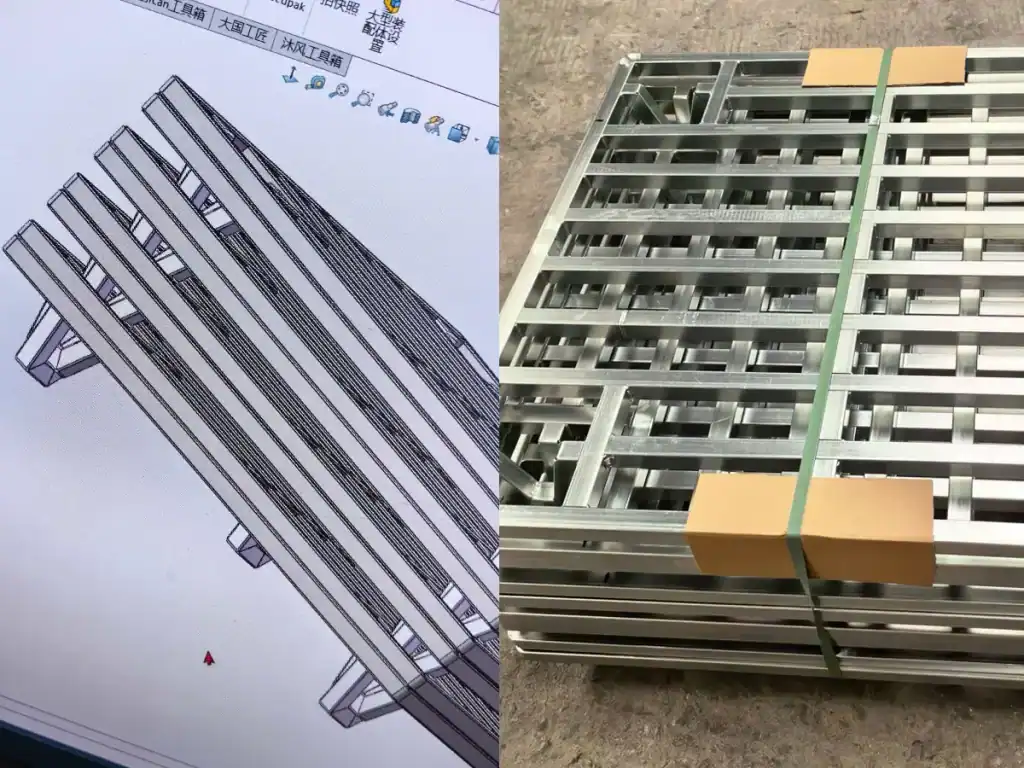
Project example: Our automated warehousing welded components case shows how build-to-print requirements connect welding, surface treatment preparation, assembly, packing, and export delivery.
Related manufacturing resources
For a broader view of Likai Metal’s factory scope, review our company background, custom metal fabrication capabilities, and OEM metal parts project examples. To discuss a build-to-print RFQ, send us your drawings.