
What is CNC machining? CNC machining is a manufacturing process that uses computer-controlled machine tools to cut and shape solid material, usually metal, into a finished part. CNC stands for Computer Numerical Control. The machine follows a digital program generated from your CAD drawing and removes material with high precision and repeatability. This guide explains what CNC machining is, how it works, the main types and materials, and where it is used.
For OEM buyers, CNC machining is often used when metal parts need tighter dimensions, threaded holes, flat surfaces, or features that cannot be made by cutting or bending alone. Common examples include shafts, housings, flanges, mounting blocks, brackets, and precision components used in machinery or industrial equipment.
When requesting a quote, it is helpful to send 2D drawings, STEP files, material requirements, tolerance notes, surface finish requirements, and expected quantities. Clear drawings allow the supplier to choose the right machining route, estimate setup time, and check whether any features can be simplified to reduce cost.
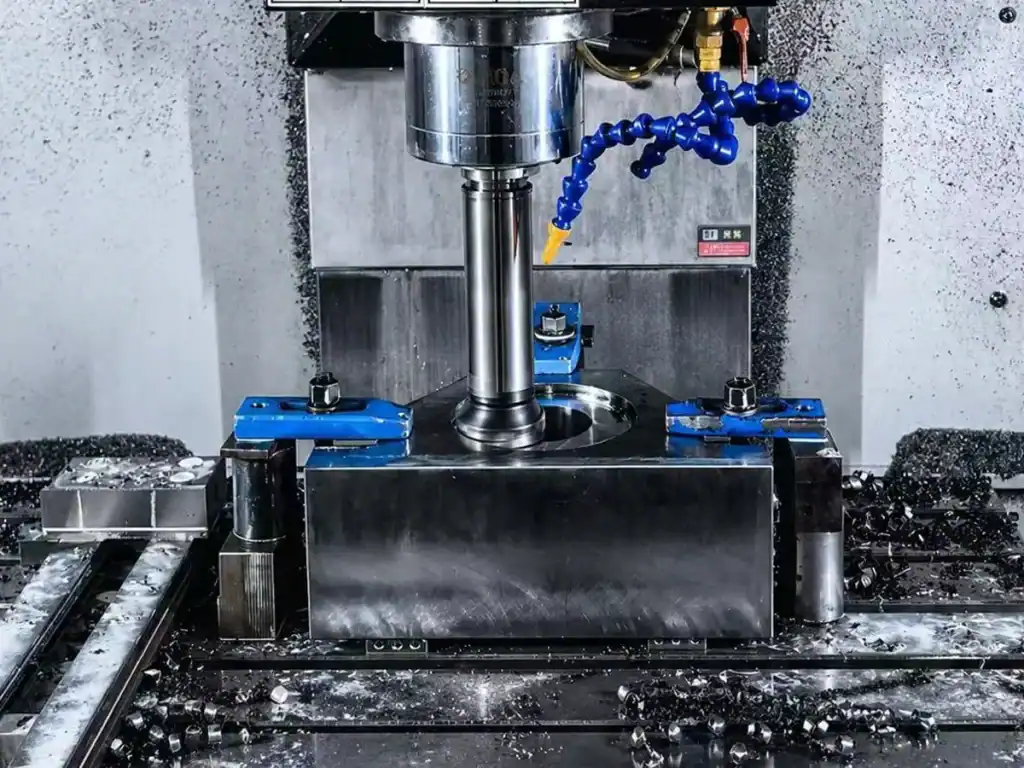
How CNC machining works
CNC machining is a subtractive process — it starts with a solid block or bar of material and cuts away everything that is not part of the final design. A CAD model is converted into machine instructions (G-code), which tell the cutting tools exactly where to move, how fast, and how deep. Because the process is fully computer-controlled, every part comes out identical, which is what makes CNC machining ideal for both precision prototypes and high-volume production.
Main types of CNC machining
- CNC milling — rotating cutting tools remove material from a fixed workpiece; used for housings, brackets, plates, and complex prismatic parts.
- CNC turning — the workpiece rotates against a cutting tool on a lathe; used for shafts, flanges, bushings, and round parts.
- Multi-axis machining (4 and 5-axis) — the tool or part moves on additional axes, enabling complex geometry in fewer setups.
Common materials
CNC machining works with a wide range of metals and plastics: aluminum, stainless steel, carbon and tool steel, brass, copper, and engineering plastics such as POM, nylon, and PEEK. Material choice affects both cost and machinability — softer metals like aluminum machine faster and cheaper than hardened steels.
Advantages of CNC machining
- High precision, with tight and repeatable tolerances
- Excellent part-to-part consistency across a production run
- Works with a broad range of metals and plastics
- Scales from one-off prototypes to high-volume production
- No expensive tooling required, unlike casting or molding
Common applications
CNC machined parts appear in almost every industry: industrial equipment housings and brackets, hydraulic and pneumatic fittings, automation components, machinery parts, medical device sub-components, and custom OEM parts made to a customer drawing.
Cost and sourcing
The price of a CNC machined part depends on material, complexity, tolerances, and quantity — see our guide on how much CNC machining costs. Many OEMs lower their costs by sourcing overseas; our guide on how to source CNC parts from China explains how to do it safely.
CNC machining tolerances and design tips
CNC machining can hold tight tolerances, but the practical result depends on material, part geometry, tool access, surface finish, and inspection method. Deep pockets, thin walls, sharp internal corners, and very small features may increase machining time or require design changes.
For a faster quote, send STEP, IGES, or SolidWorks files together with a 2D drawing. The drawing should show material, quantity, surface finish, threads, heat treatment, and critical tolerances. Clear files help the supplier choose the right CNC milling, turning, or secondary process.
Why choose CNC machining?
If you need precise, repeatable metal parts from your own drawings — whether ten prototypes or a recurring production run — CNC machining is usually the right choice. Likai Metal provides custom CNC machining services from a real factory in China. Send us your drawings for a quote within 24 hours.
CNC machining production support
For production orders, review our CNC machining services and broader custom metal fabrication capabilities. You can also send us your drawings for manufacturability and quotation review.