
For overseas buyers, choosing an OEM metal fabrication supplier is not only about price. The real concerns are usually much more practical: Can every batch remain consistent? Can the dimensions be controlled? Will welding cause deformation? Will the surface treatment protect the product from corrosion? Will the parts be packed safely for international shipping?
At Likai Metal, we understand these concerns because OEM metal fabrication projects often involve repeated production, strict dimensional requirements, welding assembly, surface protection, and export delivery. A reliable result does not come from one single process. It comes from a controlled production flow, standardized operation, automated equipment, and inspection at key stages.
Below is a typical OEM metal fabrication production flow, from raw material preparation to final container loading.
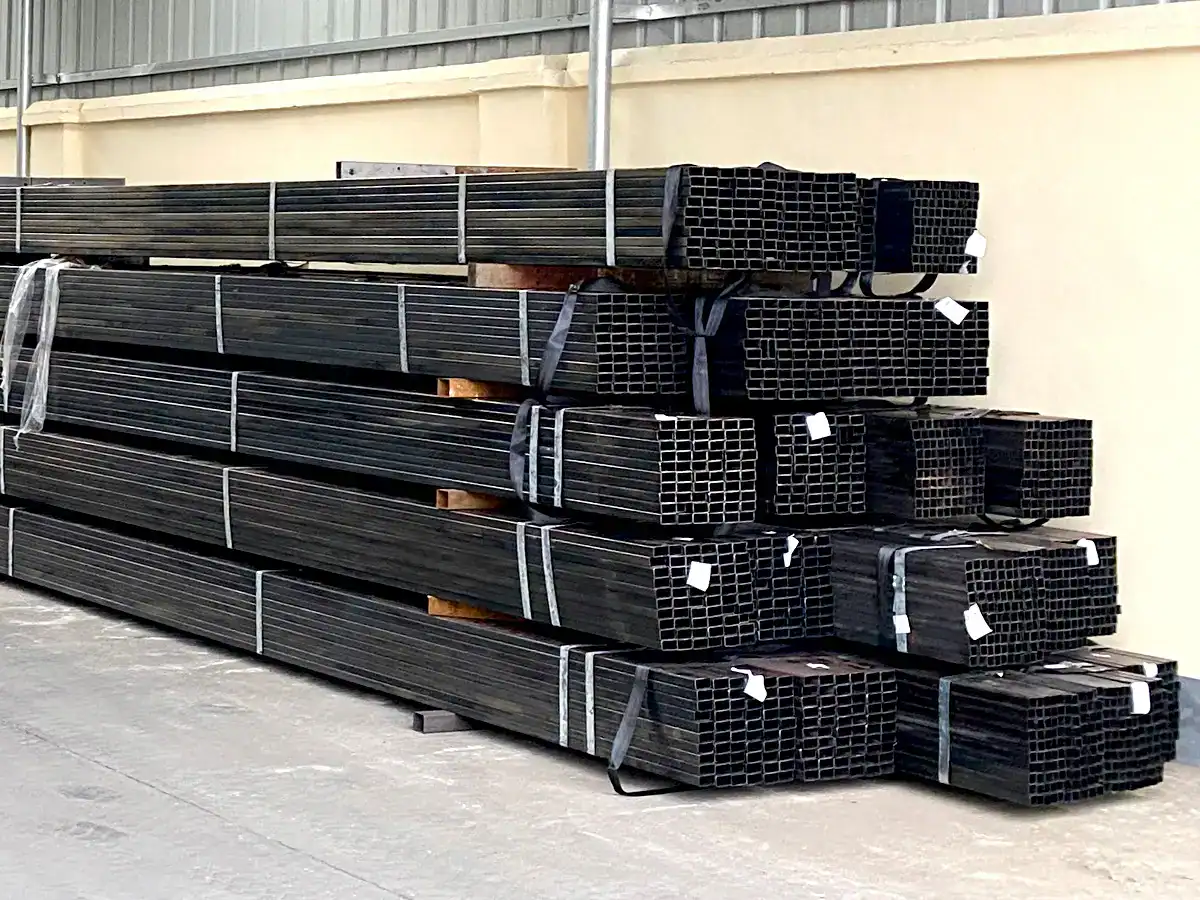
1. Raw Material Preparation: The Starting Point of Stable Quality
Consistent fabrication starts with properly prepared raw materials. Before cutting, steel tubes and other metal materials must be organized, checked, and prepared according to the production plan.
Raw material control is important because it directly affects the following processes. If the material is not stable, later cutting, welding, correction, and assembly will also become difficult to control. For batch OEM production, material consistency helps improve dimensional accuracy and reduces variation between different production lots.
By preparing materials in an organized way, the production team can ensure that each batch follows the same process standard from the very beginning.
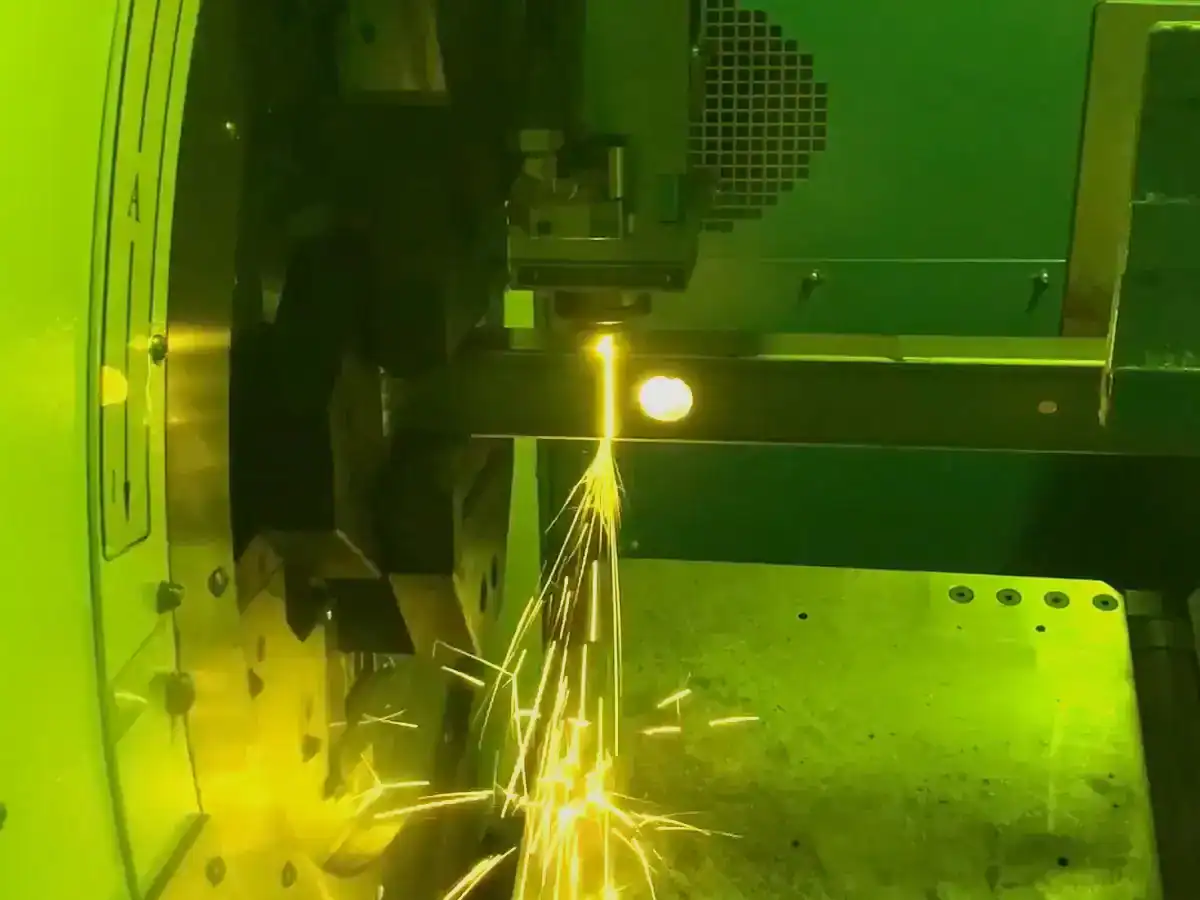
2. Laser Cutting: Turning Raw Material into Accurate Semi-Finished Parts
After raw material preparation, laser cutting is used to process steel tubes into semi-finished components. Compared with manual cutting, automated laser cutting provides better repeatability, cleaner cutting edges, and more stable dimensional control.
This stage is especially important for OEM metal fabrication because many parts need to fit together accurately during welding and assembly. If the cutting accuracy is poor, the welding position may shift, assembly gaps may increase, and the final product may fail to meet customer requirements.
Automated laser cutting helps reduce human error and supports batch consistency. It also helps prepare components for the next stage with more reliable shape, length, hole position, and cutting quality.
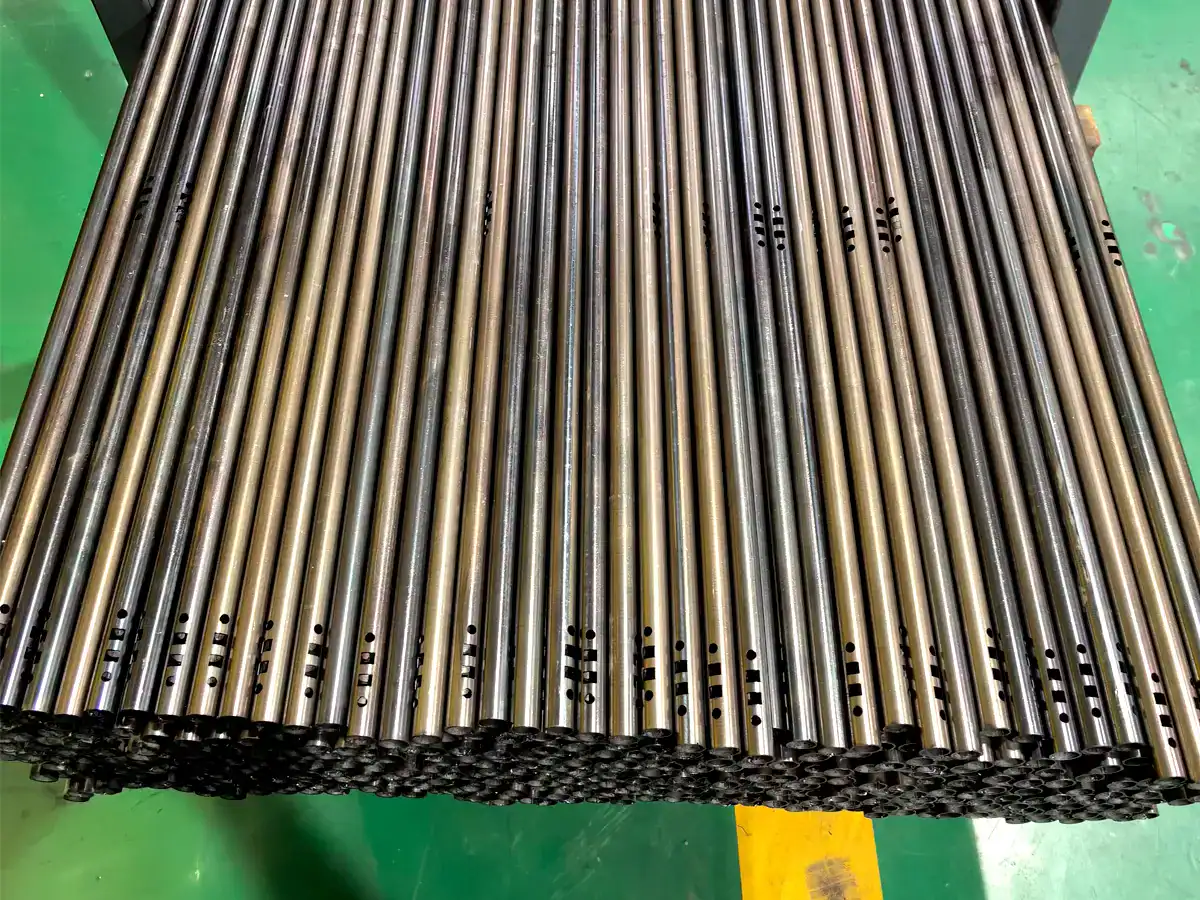
After cutting, semi-finished tube parts are organized by batch and production stage. This makes the workflow clearer and helps the team maintain traceability before welding and assembly.
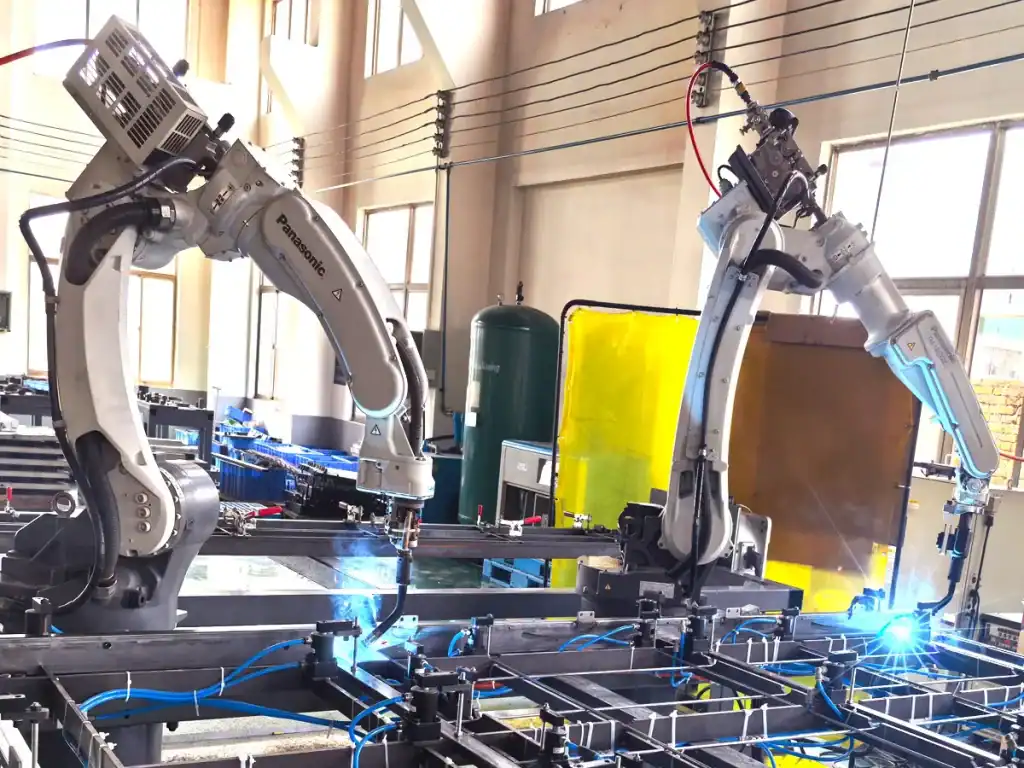
3. Robotic Welding: Improving Weld Consistency and Reducing Variation
Welding is one of the most critical stages in metal fabrication. For customers, common concerns include unstable weld appearance, insufficient weld strength, welding deformation, and inconsistent results between different batches.
To improve welding consistency, robotic welding and fixture-based production are used where suitable. Robotic welding helps keep the welding path, speed, angle, and heat input more stable than manual welding. This is especially valuable for repeated OEM parts.
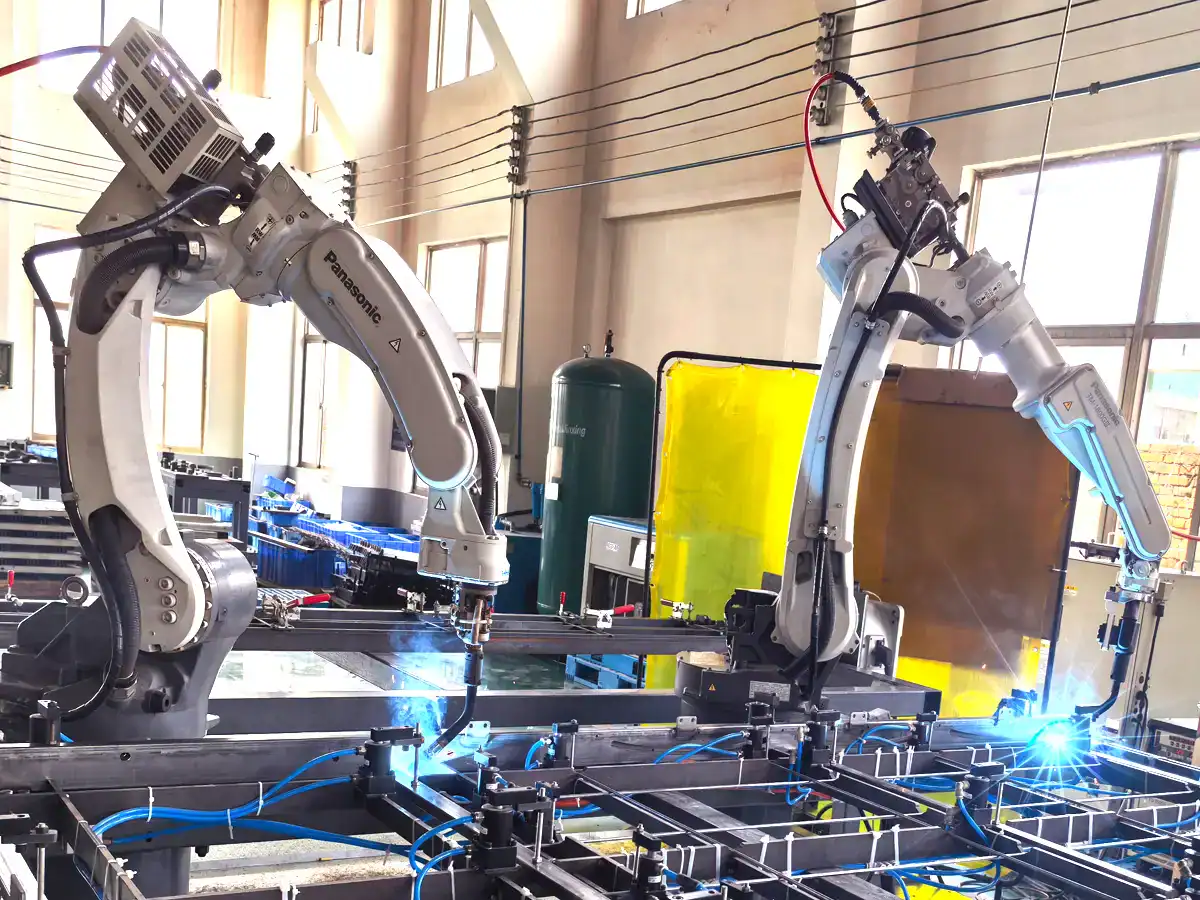
A standardized welding process helps improve repeatable weld quality and reduces differences caused by operator habits. Fixtures also help hold the parts in the correct position during welding, which supports dimensional stability and helps control welding deformation.
For OEM customers, this means the supplier is not only producing parts, but also controlling the process behind the parts.
4. Post-Welding Control: Correction, Organization, and Preparation for Surface Treatment
After welding, metal structures may require correction or straightening to control welding deformation. This is a normal and important step in fabrication, especially for frame-type parts or long steel structures.
The goal is to keep the product shape, flatness, and key dimensions within the required range before surface treatment. If deformation is not controlled at this stage, later finishing and assembly may not solve the problem.
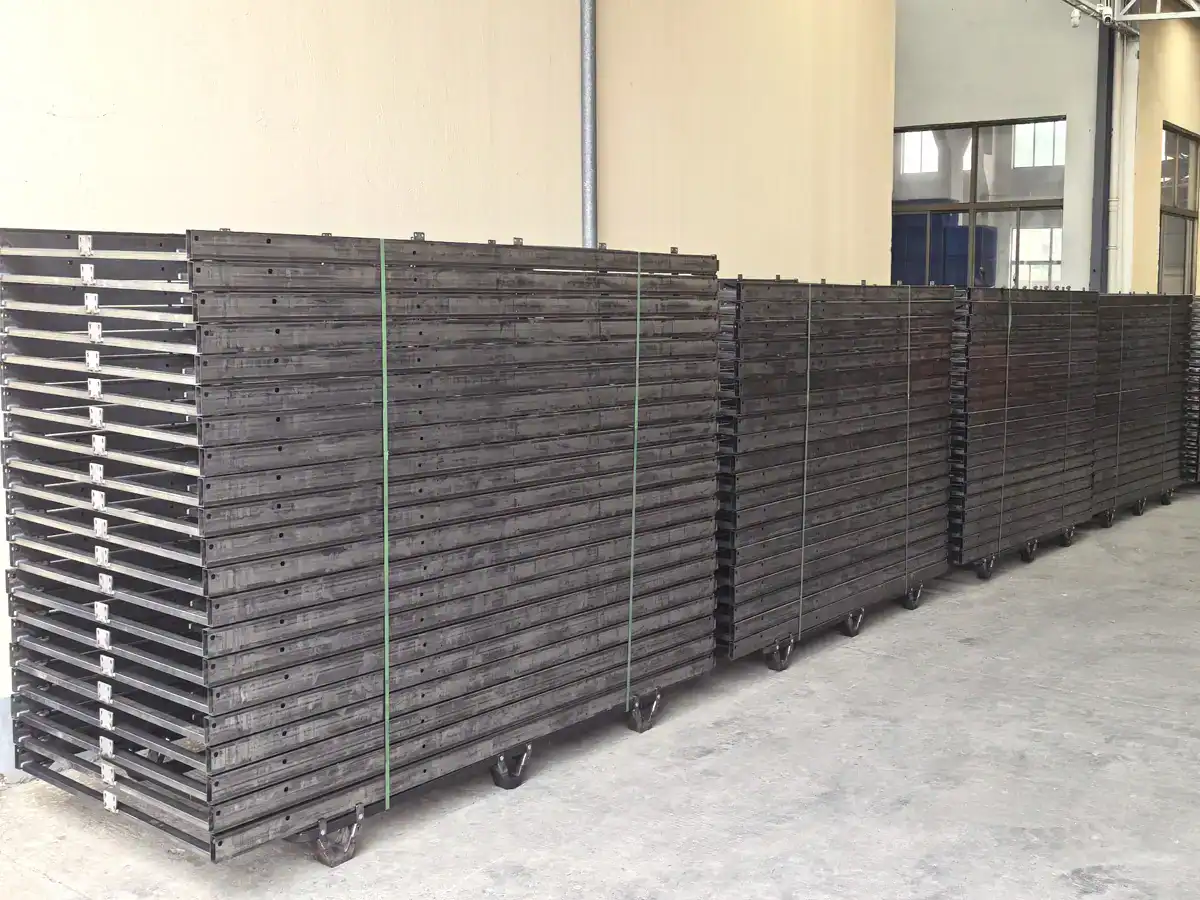
At this stage, welded semi-finished parts are organized and prepared for the next process. This helps ensure that products move through production in a controlled sequence instead of being handled randomly.
For customers, this stage shows that quality control is not only done at the end. Dimensional control and process checks are built into the production flow before the product reaches the finishing stage.
5. Surface Treatment: Zinc-Based Anti-Corrosion Protection
For many OEM metal fabrication products, corrosion protection is a key requirement. Surface treatment helps protect the product during storage, transportation, and final use.
In this project, the parts are treated with cold galvanizing / zinc-based anti-corrosion finishing. This process helps improve surface protection and provides a more uniform appearance before packing and shipment.
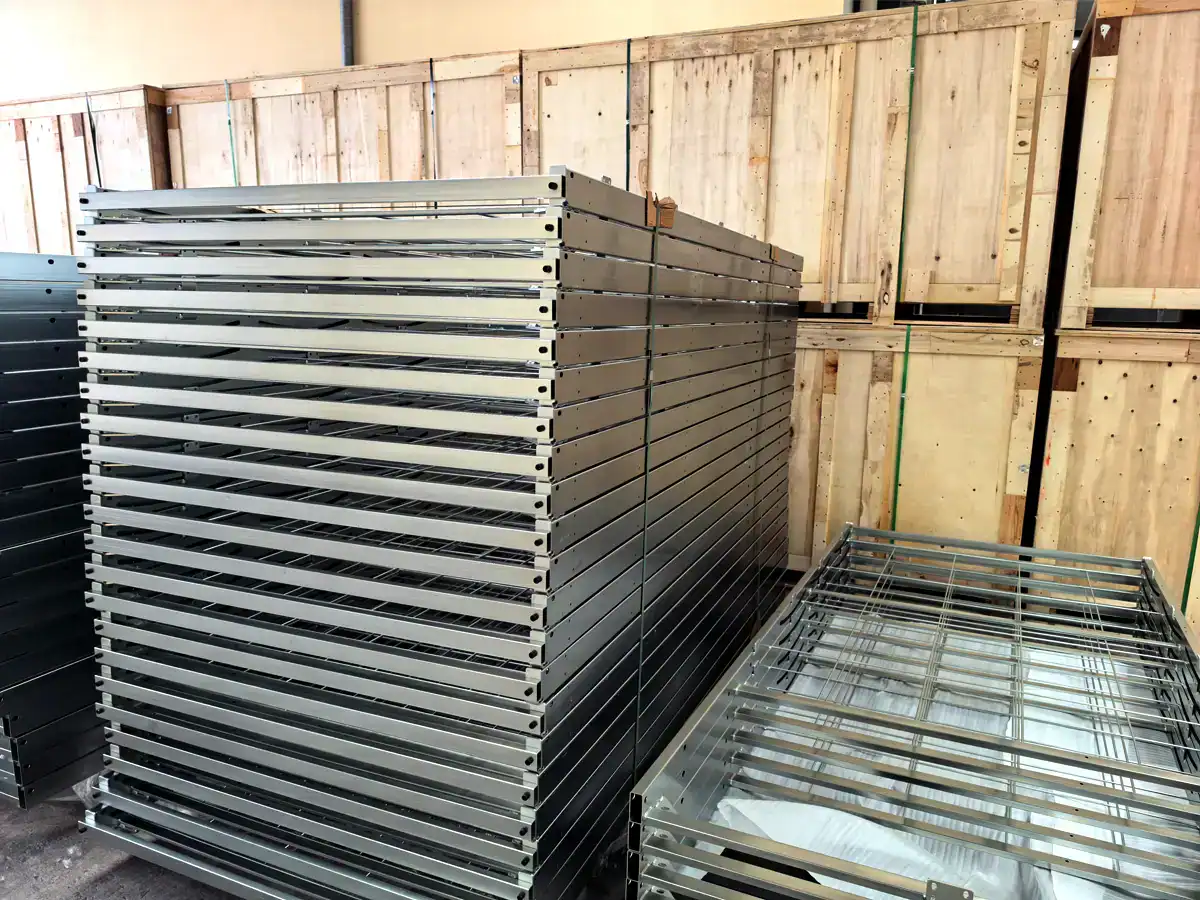
For overseas buyers, surface treatment is not just about appearance. It is directly related to product durability, corrosion resistance, and customer satisfaction after delivery. A controlled finishing process helps reduce the risk of rust, uneven coating, or surface defects.
Before packing, finished parts can also be checked to confirm that the surface condition and overall product status meet shipment requirements.
6. Packing: Protecting Finished Parts for International Shipping
Even when products are manufactured correctly, poor packing can still cause damage during transportation. For export orders, packing safety is a major concern because products may go through forklift handling, container loading, sea freight, unloading, and inland transportation.
That is why finished OEM metal fabrication parts need to be packed carefully according to their structure, size, surface treatment, and shipping requirements.
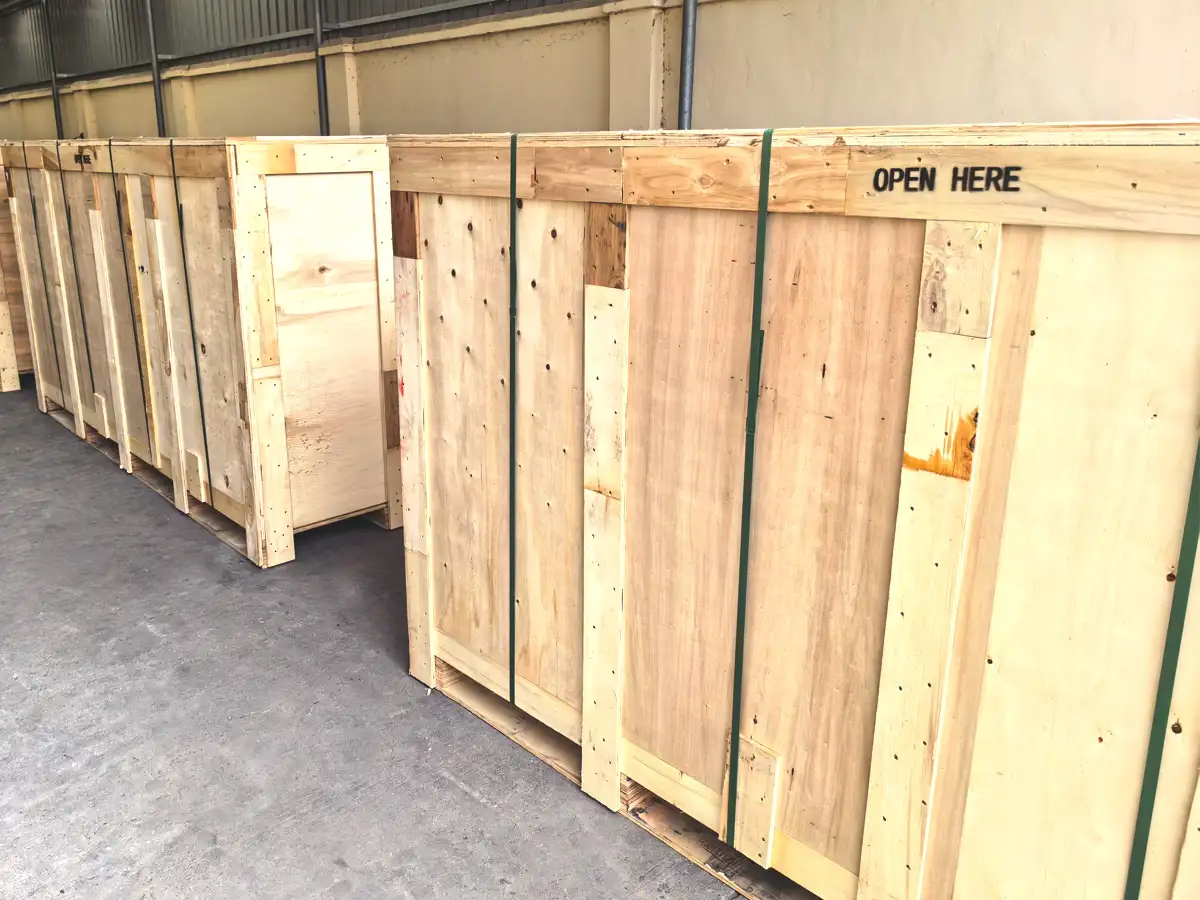
Wooden crate packing helps protect the products from impact, movement, scratching, and handling damage during international shipment. Proper packing also makes container loading easier and helps keep the shipment organized.
For customers, good packing means fewer delivery risks, fewer complaints, and better protection of finished products before arrival.
7. Container Loading: Export Delivery Readiness
The final step is container loading. At this stage, packed products are moved into the container and prepared for export delivery.
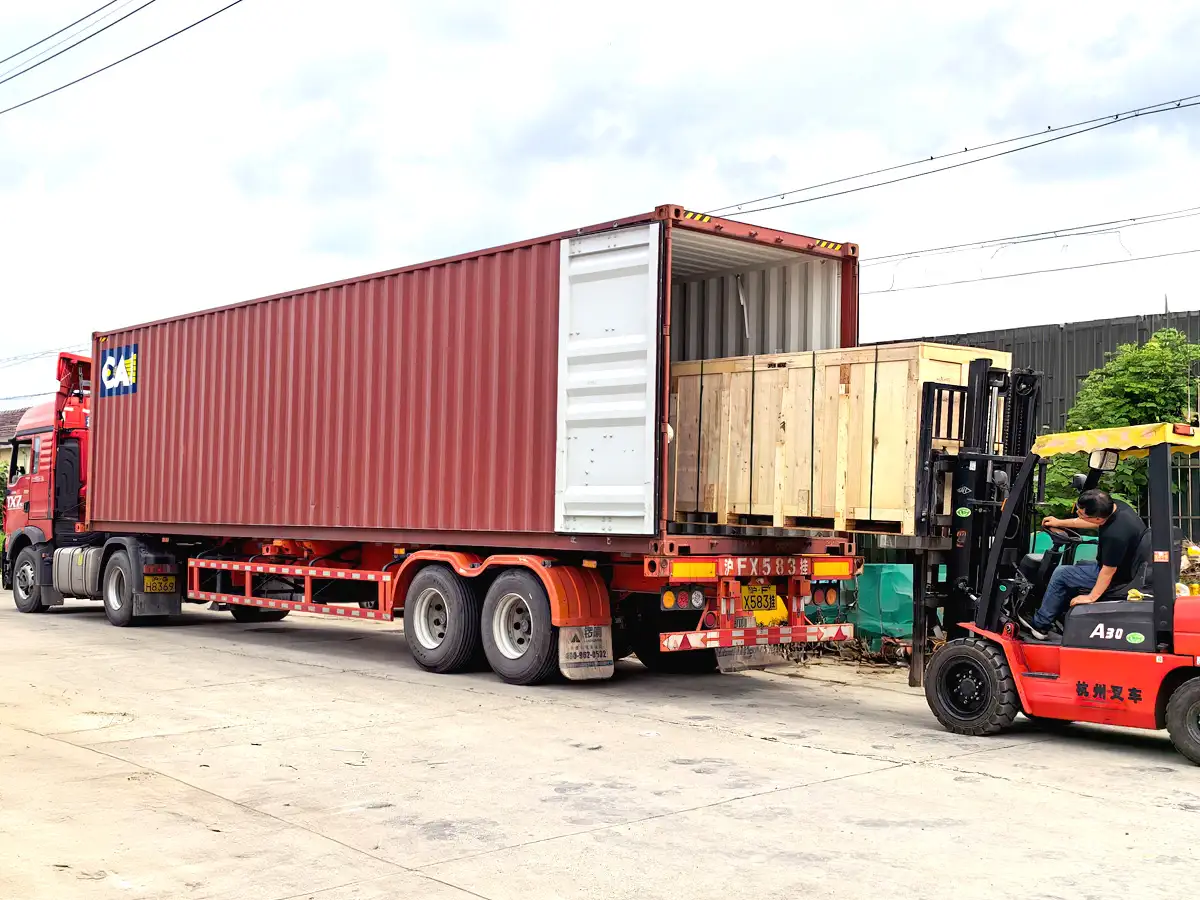
Container loading is not only a logistics step. It is also the final confirmation that the order is ready for international shipment. Proper loading helps protect the crates, improve container space usage, and reduce movement during transportation.
For overseas OEM customers, export delivery readiness is important because it shows that the supplier can manage not only production, but also packing, loading, and shipment preparation.
Why a Controlled Production Flow Matters for OEM Customers
In OEM fabrication projects, customers are usually not buying only one product. They are looking for a supplier who can support repeated orders, stable quality, and long-term cooperation.
A controlled production flow helps solve the most common customer concerns:
- Batch consistency between repeated orders
- Dimensional accuracy from cutting to assembly
- Welding deformation control during fabrication
- Stable surface treatment and corrosion protection
- Inspection and process control before shipment
- Safe packing for international transportation
- Export delivery readiness
By using automated equipment, standardized processes, fixture-based welding, organized batch handling, and strict quality control, Likai Metal helps customers reduce production risks and improve confidence in every order.
Conclusion
A reliable OEM metal fabrication project requires more than cutting, welding, and packing. It requires control at every stage.
From raw steel tube preparation to laser cutting, robotic welding, correction, surface treatment, wooden crate packing, and container loading, each step affects the final product quality. When the production flow is standardized and the process is controlled, customers can receive more consistent parts, better dimensional stability, stronger corrosion protection, and safer export delivery.
For OEM metal fabrication buyers, this is the real value of working with a manufacturing partner that understands quality, consistency, and international delivery requirements.
If you are looking for a reliable OEM metal fabrication partner for repeat production, welded assemblies, surface-treated parts, or export-ready metal products, please contact us or send us your drawings for project evaluation.