
The way a sheet metal part is designed has a huge impact on what it costs and how easily it can be made. Small changes — a consistent bend radius, the right hole spacing, sensible tolerances — can cut tooling time, reduce scrap, and lower your unit price without changing the part’s function. This guide covers practical sheet metal design guidelines (design for manufacturing, or DFM) that help you get better parts at a lower cost.
For OEM sheet metal parts, good design helps reduce manufacturing risk, improve part consistency, and shorten quotation time. Important design details include material grade, thickness, bend radius, flange length, hole size, slot width, tolerance notes, surface finish requirements, and whether the part will require laser cutting, bending, welding, or assembly.
Before quotation, buyers can provide DXF or DWG files for flat patterns, STEP files for formed parts, 2D drawings with tolerance requirements, material specifications, finish requirements, and expected quantities. Clear design information helps us review cutting feasibility, bending allowance, welding distortion, inspection needs, and possible cost-saving changes before production.
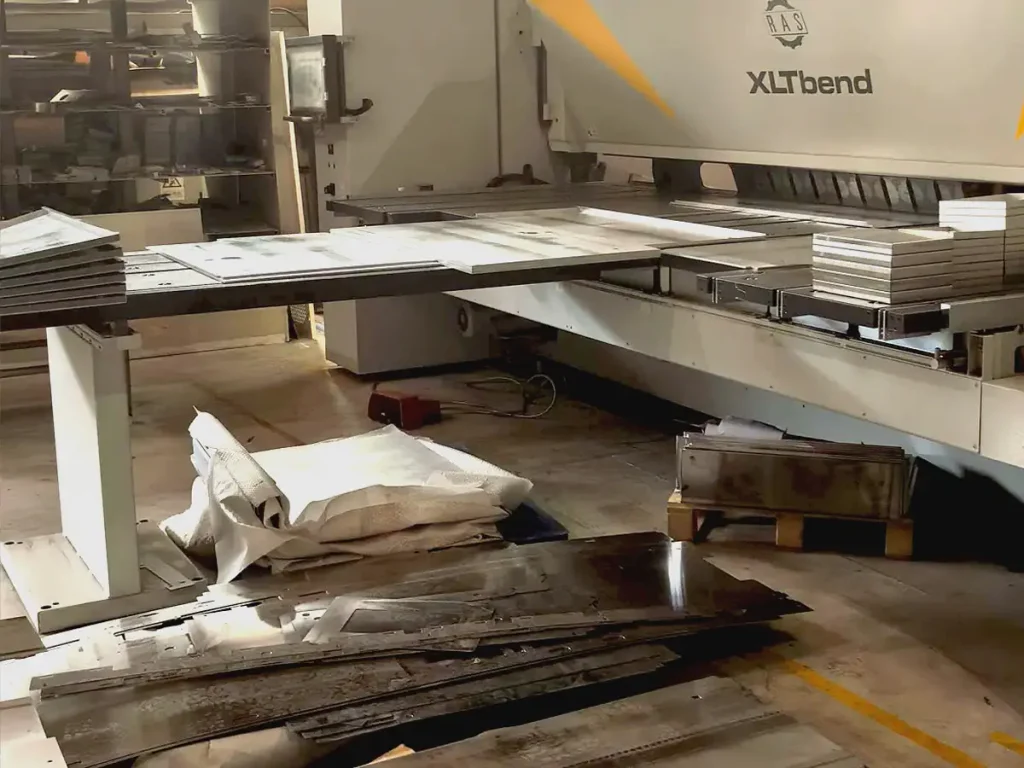
Why DFM matters for sheet metal parts
Sheet metal fabrication is a sequence of cutting, bending, and joining operations. A design that ignores how those operations actually work forces the manufacturer to add setups, custom tooling, or hand-work — all of which raise cost and lead time. Designing with the process in mind (DFM) means the part flows through the shop smoothly. A good manufacturer will review your drawing and flag these issues before production; see how that works in our guide to build-to-print manufacturing.
8 sheet metal design guidelines
- Keep a uniform material thickness. Designing the whole part in one gauge avoids extra setups and material changes. Mixing thicknesses multiplies cost.
- Respect a minimum bend radius. As a rule of thumb, the inside bend radius should be at least equal to the material thickness. Sharper bends risk cracking and need special tooling.
- Keep holes away from bends. Holes placed too close to a bend line will deform. Leave a clear distance (commonly about 2.5 times material thickness plus the bend radius) between a hole and a bend.
- Maintain hole-to-edge distance. Holes too near an edge can bulge or tear. Keep at least 2 times the material thickness from the edge.
- Use consistent, standard hole sizes. Standard tooling and repeated hole sizes are faster and cheaper than many one-off diameters.
- Add bend relief. Where a bend meets an edge, a small relief cut prevents tearing and distortion.
- Apply tight tolerances only where needed. Standard tolerances are cheapest. Reserve tight callouts for mating or critical features — over-specifying drives up cost.
- Design welding and assembly in early. Plan for weld access, joint type, and fit-up. Tabs and slots can speed up assembly and improve weld quality.
Common sheet metal design mistakes
- Bends too close together to fit the press brake tooling
- Unnecessarily tight tolerances on non-critical dimensions
- Sharp internal corners that should have a small radius
- Holes or cutouts placed in the bend zone
- Mixing material thicknesses across one assembly
Materials and finishes
Common sheet metal materials include carbon steel, stainless steel, and aluminum, each with different bendability and cost. Finishes such as powder coating, anodizing, and plating should be specified early, since they can affect tolerances and hole sizes. Choosing a standard material and finish keeps cost down.
How a DFM review saves you money
The cheapest time to fix a manufacturability problem is before any metal is cut. When you send a drawing, a capable manufacturer reviews it for the issues above and proposes changes that lower cost — the same principle behind controlling machining cost. At Likai Metal we provide written DFM feedback on every new sheet metal project.
Get a sheet metal quote
Likai Metal provides laser cutting, bending, and welding for custom sheet metal parts from a real factory in China. Send us your drawings and we will review your design and provide a quotation within 24 hours.
Sheet metal fabrication planning
For parts that combine cutting, bending, welding, and finishing, review our custom metal fabrication capabilities and project examples. To check drawings before production, contact our team.