
Build-to-print manufacturing means an OEM customer provides finished drawings, CAD files, material requirements, tolerances, and finish notes, and the manufacturer produces the parts exactly to that print. For custom metal parts, this model is common for CNC machined components, laser cut parts, bent sheet metal, welded frames, brackets, panels, and complete metal assemblies.
Build-to-print manufacturing is used when the buyer provides completed drawings, CAD files, material specifications, tolerances, finish requirements, and inspection standards. The supplier’s role is to manufacture the parts according to the provided technical documents, rather than redesigning the product.
For OEM metal parts, a clear build-to-print package helps reduce quotation uncertainty, shorten communication time, and improve production consistency. This is especially useful for CNC machined parts, sheet metal parts, welded assemblies, brackets, frames, and repeat production orders based on customer drawings. Send us your drawings and technical requirements to review build-to-print manufacturing feasibility before production.
If you have ever sent a supplier a finished engineering drawing and asked them to make the part exactly as specified, you have used build-to-print manufacturing. This guide explains the meaning of build-to-print, how it differs from build-to-spec, what files you need for a quote, and how OEM buyers can choose a reliable manufacturing partner.
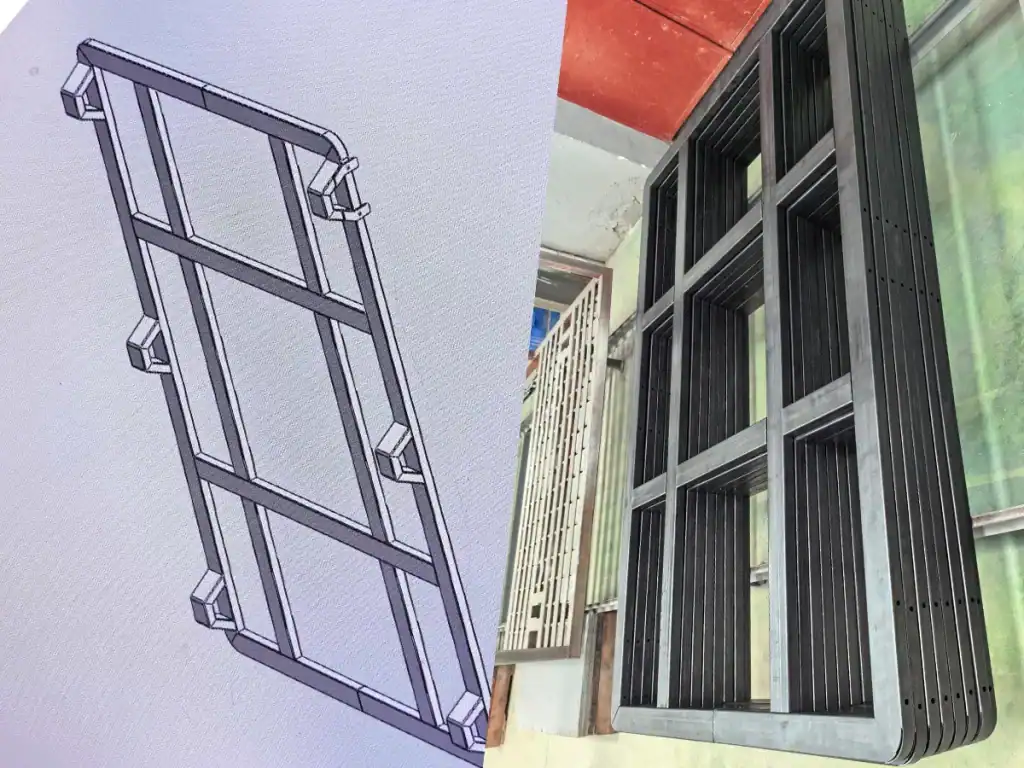
Quick answer: what is build-to-print manufacturing?
Build-to-print manufacturing is a production model where the customer owns the design and the supplier owns the manufacturing execution. The drawing defines the part geometry, tolerances, material, finish, and inspection requirements. The supplier should review the drawing for manufacturability, but the final design responsibility stays with the customer.
What does “build to print” mean?
Build-to-print (sometimes written “build to print,” or abbreviated BTP) is a manufacturing model in which the customer supplies a complete technical drawing or 3D model, and the manufacturer produces the part exactly to those specifications. The manufacturer is responsible for making the part correctly — holding the dimensions, tolerances, materials, and finishes called out on the drawing — but is not responsible for the design itself.
In other words: you own the design; the manufacturer owns the production. The drawing is the contract. If the print specifies a particular aluminum grade with a defined tolerance and a clear anodized finish, that is exactly what you should receive.
Build-to-print vs. build-to-spec vs. contract manufacturing
These terms overlap, which is part of the confusion. In sourcing conversations, the difference is mainly about who owns the design and how much engineering support the supplier provides.
| Model | What the buyer provides | Supplier responsibility | Best fit |
|---|---|---|---|
| Build-to-print | Finished drawings, CAD files, tolerances, material, and finish notes | Manufacture exactly to the print and inspect against the drawing | Validated OEM metal parts and repeat production |
| Build-to-spec | Performance requirements, envelope size, loads, or application needs | Help develop or finalize the design before production | Early-stage products or parts that need engineering support |
| Contract manufacturing | Either drawings or specifications, depending on the project | Outsourced production, sometimes including sourcing and assembly | Broad manufacturing outsourcing |
Build-to-print is the right model when your engineering is already done and validated, and you simply need a reliable production partner.
What you need to provide for a build-to-print quote
The quality of your quote — and your finished parts — depends on the quality of the information you provide. For a fast, accurate build-to-print quotation, send your manufacturer:
- A complete 2D drawing (PDF or DWG) and/or a 3D model (STEP, IGES). The 3D model defines geometry; the 2D drawing defines critical dimensions, tolerances, and notes.
- Material specification, including grade — for example, 304 versus 316L stainless steel.
- Tolerances, and which dimensions are critical. Calling out only the tolerances that matter helps keep cost down.
- Surface finish and any coating or plating requirements.
- Quantity, and whether this is a prototype, a pilot run, or recurring production.
- Any inspection, certification, or packaging requirements.
If you only have a sample part and no drawings, a capable manufacturer can often reverse-engineer it — but expect to confirm critical dimensions before production begins.
The advantages of build-to-print manufacturing
- Predictable results. Because the drawing defines everything, you know exactly what you will receive.
- Design control and protected IP. Your design stays yours; the manufacturer simply executes it.
- Easier multi-sourcing. A complete drawing package can be quoted by more than one supplier, which helps with pricing and supply-chain resilience.
- Faster production. With the engineering already done, the manufacturer can move straight to quoting and production.
- Repeatability. The same drawing produces the same part, run after run.
When build-to-print is not the right fit
Build-to-print assumes your design is finished and manufacturable. It is less suitable when:
- Your design is still evolving and you expect frequent changes.
- You want the manufacturer’s input on how to make the part cheaper or easier to produce — that is build-to-spec or design-for-manufacturing work.
- You have only a concept, not a drawing.
A good manufacturer will still review your drawing for manufacturability (DFM) and flag problems before cutting metal — but in build-to-print, the final design call is always yours.
How to choose a build-to-print manufacturer
Not every shop that accepts drawings is a good build-to-print partner. Before you commit, look for:
- Real manufacturing capability, not a trading company. Confirm the supplier actually operates the machines — CNC, laser cutting, bending, welding — rather than subcontracting everything.
- DFM feedback. The best partners review your drawing and tell you, in writing, where a small change could cut cost or improve yield.
- Clear tolerancing and inspection. Ask how they inspect parts and whether they provide first-article inspection reports.
- IP protection. A manufacturer should be willing to sign a mutual NDA before quoting on sensitive designs.
- Communication. For overseas sourcing, responsive English communication and clear lead-time commitments matter as much as price.
- Quote turnaround. A supplier who can quote within 24 to 48 hours respects your timeline.
Build-to-print manufacturing at Likai Metal
Likai Metal is a build-to-print manufacturer based in Yancheng, China, serving industrial OEMs across North America and Europe. We are a true factory — not a trading company — running CNC machining, laser cutting, sheet metal bending, surface finishing, and robotic welding under one roof.
You send the drawing, sample, or 3D file; we handle quotation, production, inspection, and delivery. We provide written DFM feedback when we see an opportunity to save you money, sign mutual NDAs on sensitive designs, and communicate in English throughout your project.
Explore our metal manufacturing capabilities, review custom metal parts project examples, or contact us to send a drawing and get a quote.
Frequently asked questions
Is build-to-print the same as contract manufacturing?
Not exactly. Contract manufacturing is the broad category of outsourced production. Build-to-print is a specific model within it, where the customer supplies finished drawings and the manufacturer builds to them.
What file formats do I need for a build-to-print quote?
A 2D drawing in PDF or DWG plus a 3D model in STEP or IGES is ideal. The 3D model defines geometry; the 2D drawing defines tolerances and critical notes.
Can a manufacturer build from a sample if I have no drawings?
Often yes. A capable shop can reverse-engineer a sample, but you should confirm critical dimensions before production begins.
Does build-to-print protect my intellectual property?
It can. Because you retain the design, your IP stays with you. For added protection, ask your manufacturer to sign a mutual NDA before sharing sensitive drawings.
Have a drawing ready? Send it to us and we will review it and provide a quotation within 24 hours.
Related pages: Manufacturing capabilities · Project examples · How to source CNC parts from China · How much does CNC machining cost?
For a side-by-side sourcing comparison, read Build to Print vs Build to Spec: Key Differences for OEM Metal Parts.
Work with Likai Metal
Learn more about Likai Metal, review our custom manufacturing capabilities, and send drawings for a build-to-print quotation.