
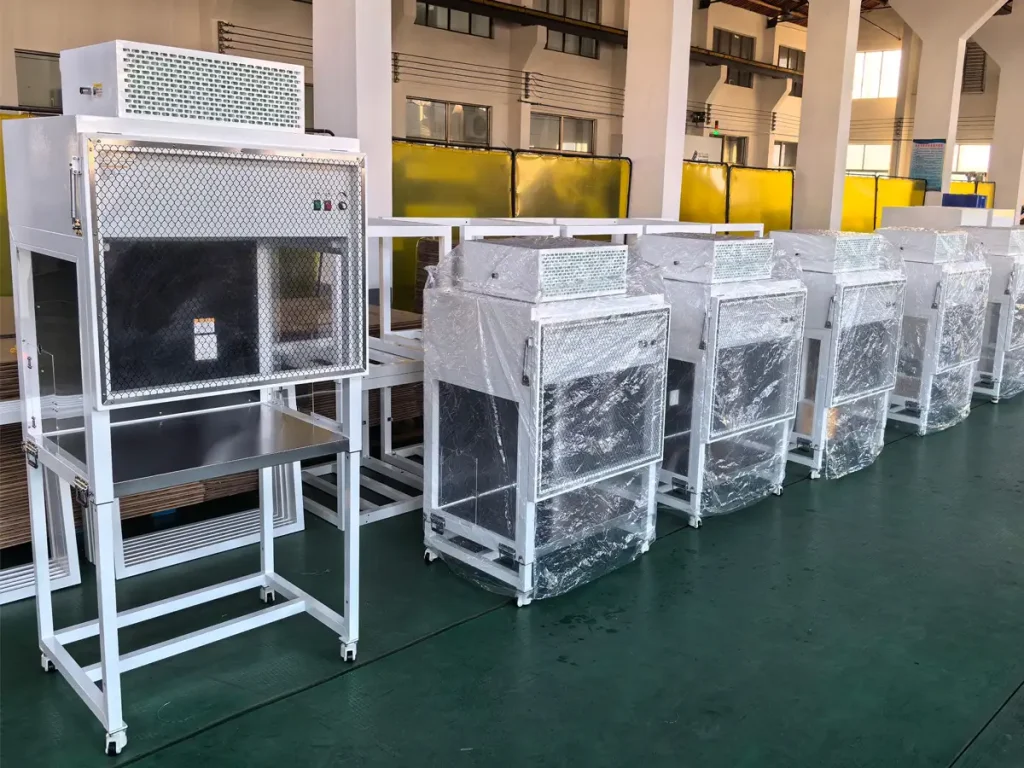
Custom mobile clean workbenches are often used where operators need a localized clean work area, convenient equipment access, and a stable metal structure for controlled production environments. For OEM buyers, the challenge is not only whether one unit can be built, but whether every unit in a batch can maintain consistent dimensions, reliable welded frames, clean surface finishing, safe assembly, and export-ready packing.
This manufacturing case shows how Likai Metal produced custom mobile clean workbenches through drawing-based metal fabrication, tube laser cutting, robotic welding, powder coating preparation, final assembly, inspection, and packing. The project reflects a typical OEM production workflow where multiple processes must be coordinated before finished equipment can be delivered.
Project Overview
The product in this project is a custom mobile clean workbench built around a welded metal frame, sheet metal components, transparent protective doors, internal filtration-related components, controls, and caster-mounted mobility. The workbench needed to combine structural stability, a clean, professional appearance after assembly, and repeatable production quality across a batch of units.
From the beginning, the main manufacturing concerns were dimensional consistency, frame welding quality, surface finish appearance, assembly fit-up, and packing protection. For overseas OEM projects, these details are important because any variation in frame size, door fit, component positioning, or surface coating can create assembly problems, rework, or shipment risk.
Likai Metal managed the project through a staged production flow: material preparation, tube laser cutting, frame welding, component welding, surface coating preparation, assembly, inspection, and export packing. Each stage supported the next one, reducing late-stage assembly or delivery problems.
Publication Note: This manufacturing case and the accompanying production images are published with the customer’s authorization. To protect confidentiality, the customer’s identity, drawings, and sensitive technical information are not disclosed.
Manufacturing Requirements for Mobile Clean Workbenches
A mobile clean workbench is more than a basic welded frame. It combines metal structure, sheet metal panels, moving parts, functional components, and visual finish requirements. The final product needs to be strong enough for repeated movement, accurate enough for assembly, and consistent and professional in appearance for use in production environments.
In this project, the manufacturing work focused on practical requirements. The steel tube frame needed to maintain consistent geometry after cutting and welding. Sheet metal components needed clean edges and stable dimensions. The welded structure needed to control distortion so that doors, panels, and other parts could be assembled smoothly. Surface treatment needed to provide a clean, uniform appearance, and packing needed to protect the finished workbenches during transportation.
These requirements made process control important. Accurate cutting improves welding fit-up. Stable fixtures help reduce welding variation. Surface preparation helps coating quality. Final assembly and inspection confirm that each workbench is ready before packing.
Production Flow
The following production flow shows the main manufacturing stages used to build the custom mobile clean workbenches from raw materials to packed finished products.
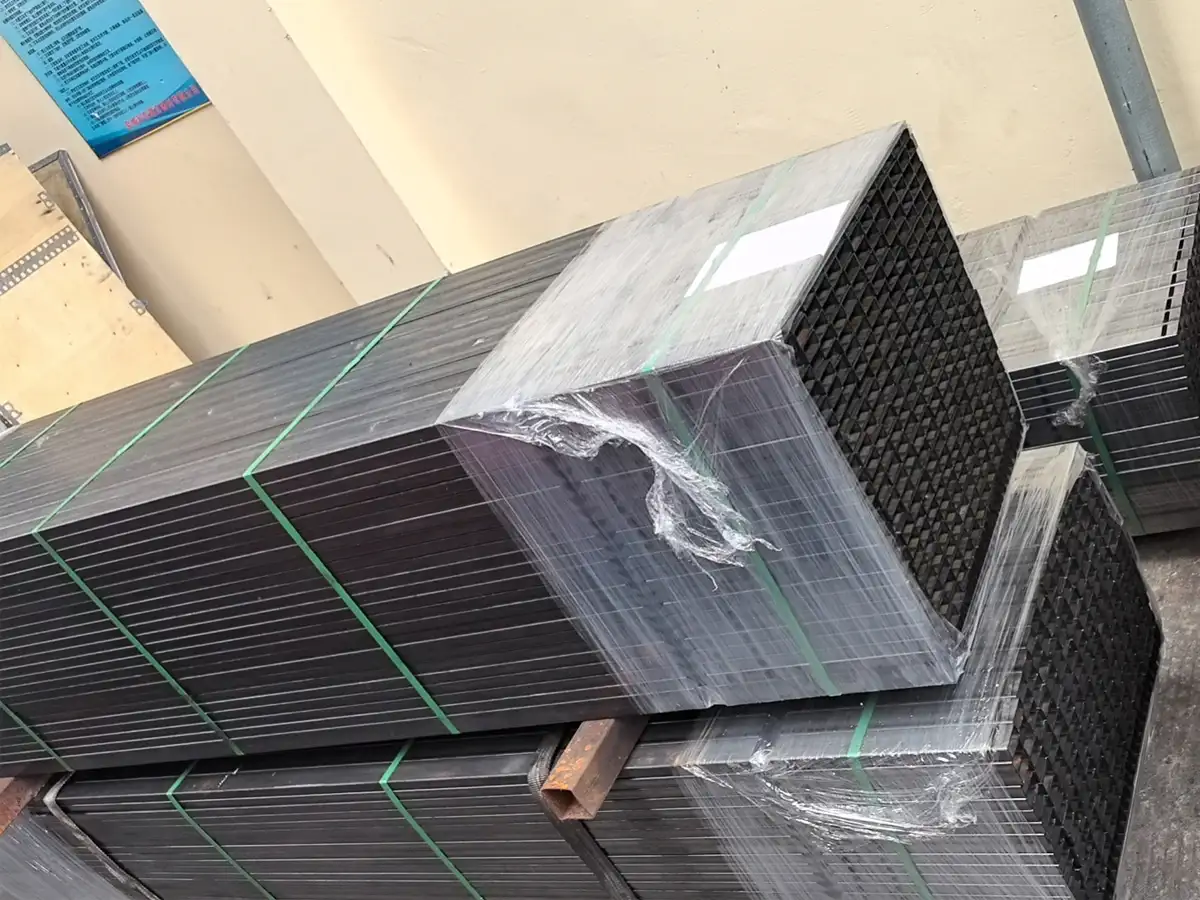
1. Material and Component Preparation
Production began with organized sheet metal and tube material preparation. Materials were checked, grouped, and arranged before fabrication so the production team could reduce mix-up risk and support batch consistency.
Good preparation is especially important for custom OEM work because different components may look similar before cutting or forming. Clear material organization helps keep the workflow stable and reduces unnecessary handling during later stages.
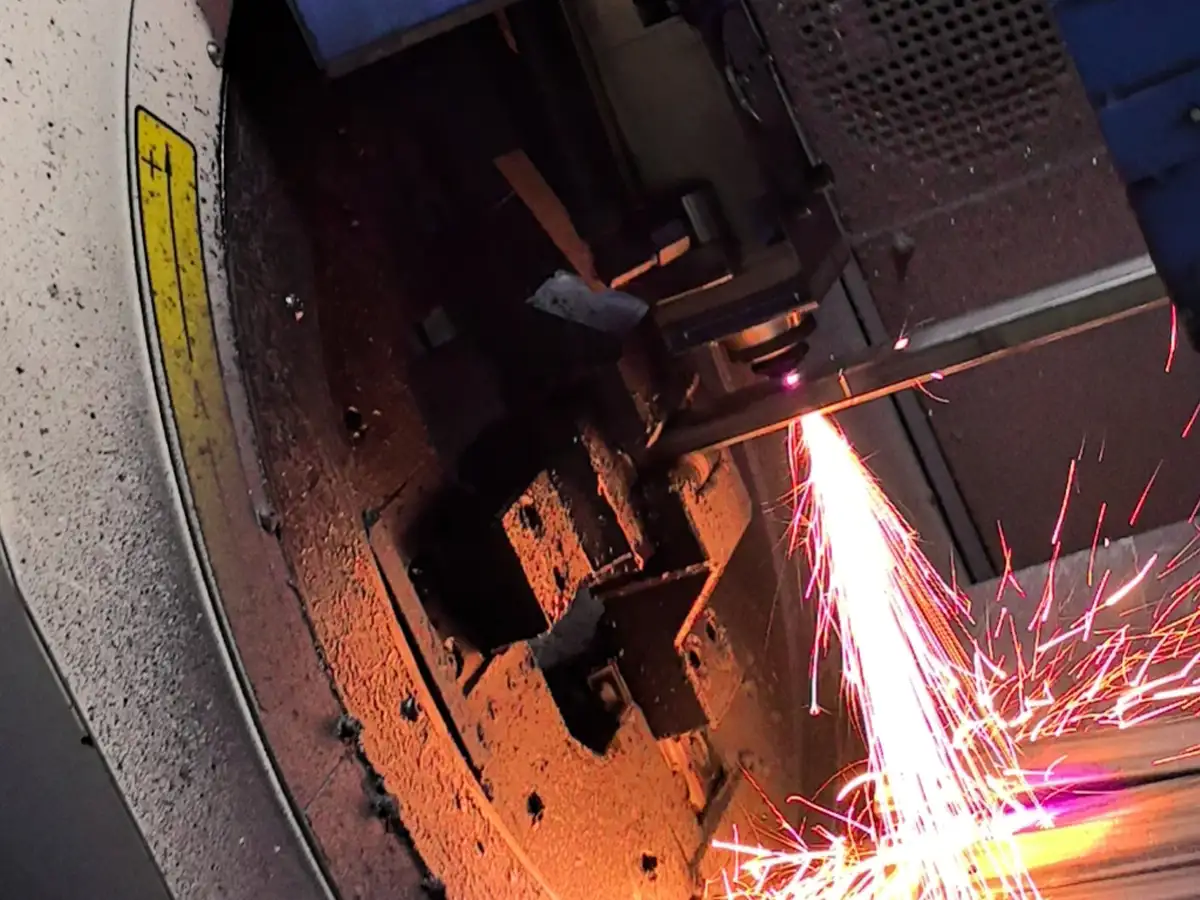
2. Laser Tube Cutting
The frame tubes were processed using tube laser cutting to prepare accurate lengths, profiles, and connection features. This step helps improve repeatability before welding and reduces manual correction during frame assembly.
For welded equipment frames, cutting accuracy is one foundation of dimensional consistency. Likai Metal’s laser cutting services support clean tube and sheet metal preparation for downstream fabrication, welding, and assembly.
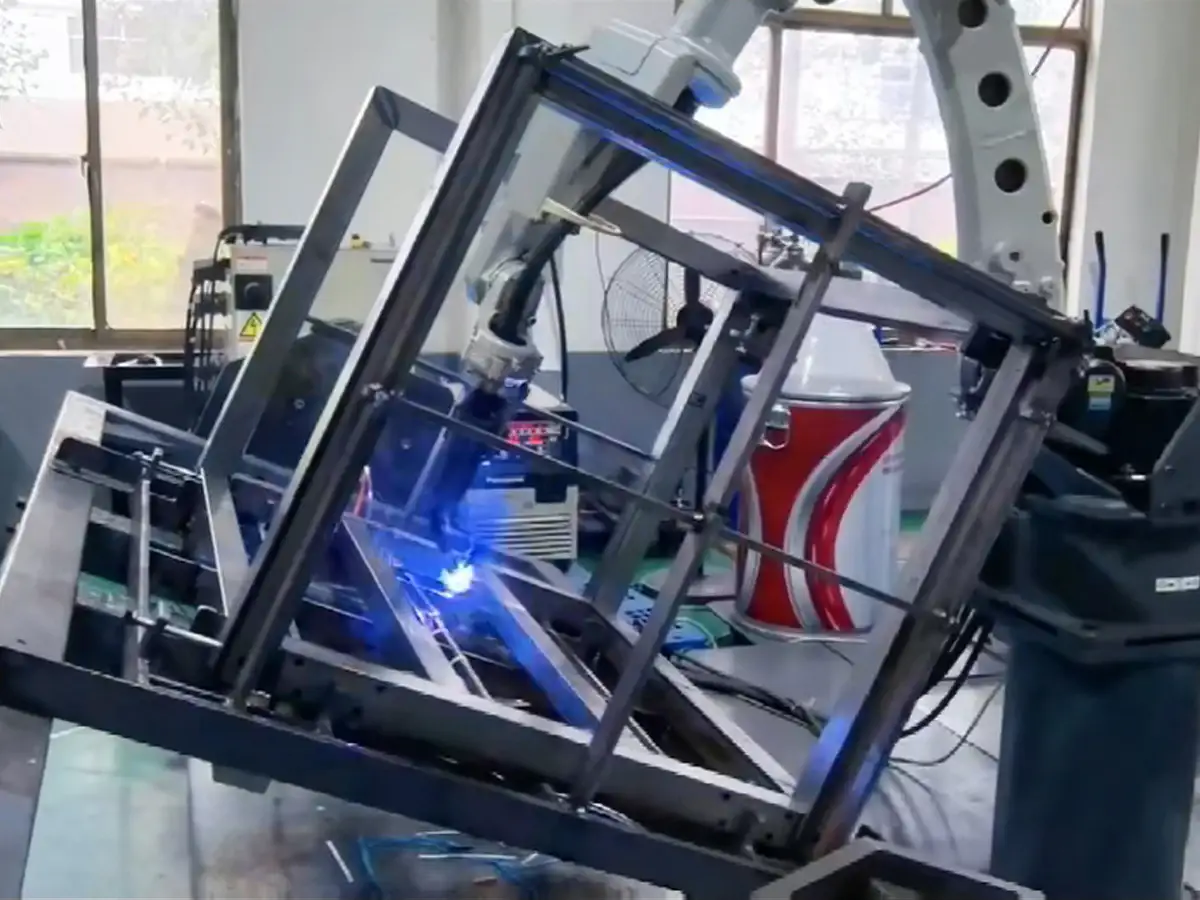
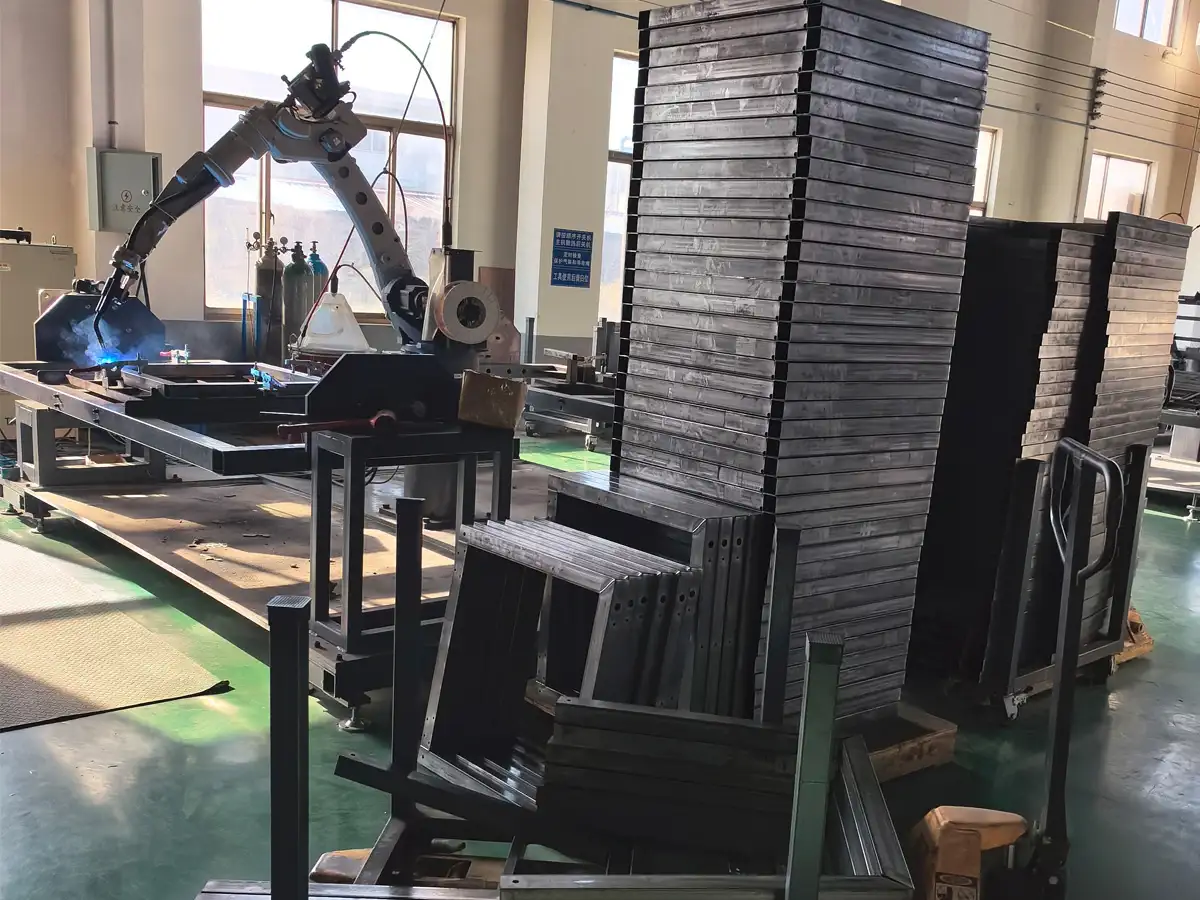
3. Main Frame Robotic Welding
After cutting, the main steel frames were positioned and welded. Robotic welding was used on large frame structures to improve weld consistency and reduce variation between repeated units.
Fixture-based welding is valuable because the frame needs to remain square and stable after welding. Consistent positioning helps control welding deformation and supports smoother assembly of panels, doors, casters, and internal components. Likai Metal’s robotic welding services are used for repeatable welded assemblies that require stable geometry.
4. Component Batch Welding
In addition to the main frames, smaller steel components were welded in batches. Batch welding helps maintain repeatable weld quality across multiple similar parts and keeps the production flow organized.
For OEM production, component-level consistency is as important as the main frame. If welded subassemblies vary too much, the final product can become harder to assemble and inspect. Grouping similar parts by process helps improve production control.
5. Welded Frames Before Powder Coating
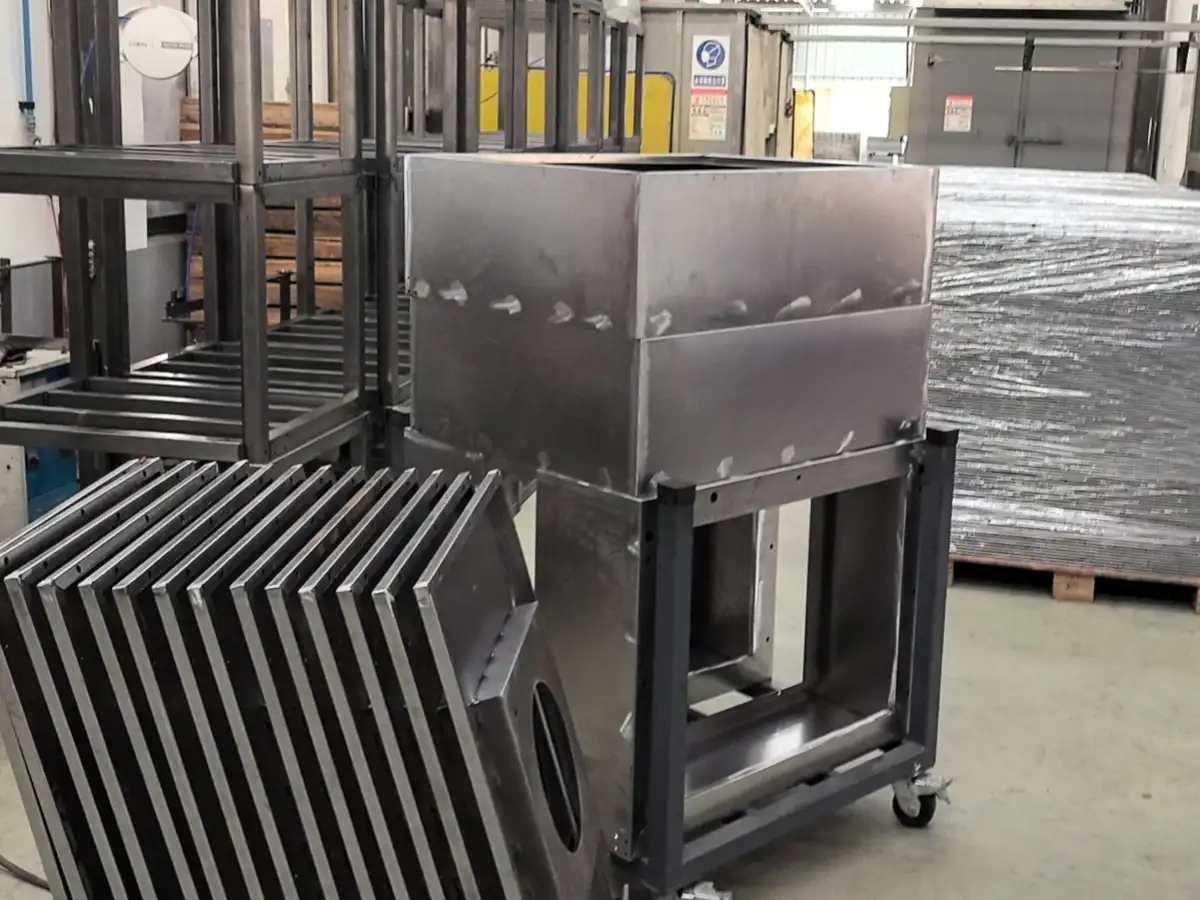
Before powder coating, welded frames were reviewed to check shape, weld condition, and production readiness. This stage helps identify visible welding or fit-up issues before the surface finish is applied.
Powder coating can improve appearance and surface protection, while final coating quality depends on sound fabrication and proper surface preparation. Reviewing welded frames before coating helps protect final quality. Sheet metal and frame components may also require bending and forming, which are part of Likai Metal’s sheet metal bending services.
6. Semi-Finished Assembly
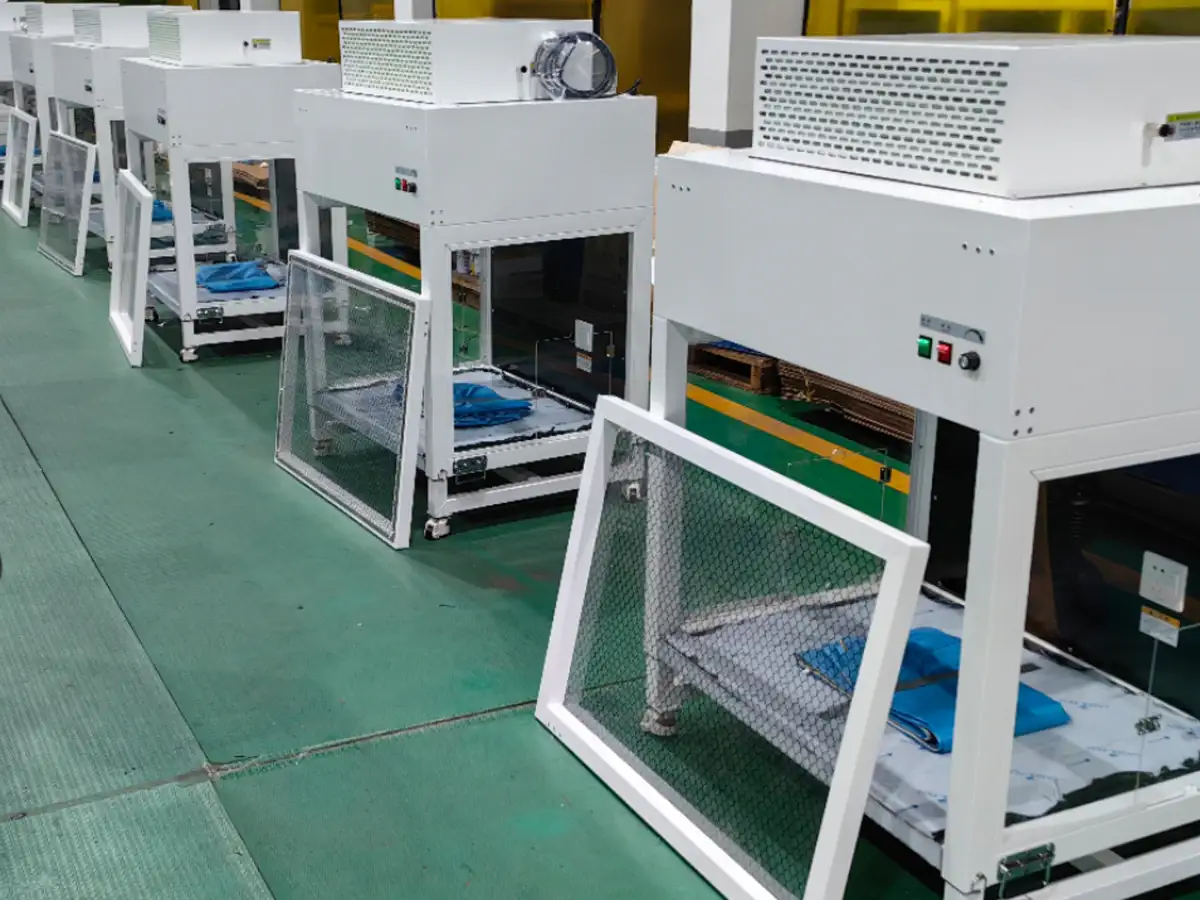
After surface treatment preparation and coating-related work, the workbenches entered semi-finished assembly. Frames, panels, protective doors, caster components, controls, and filtration-related parts were assembled and checked for fit.
This stage is where earlier process control becomes visible. If the frame is distorted, holes are misaligned, or components vary between units, assembly becomes slower and less predictable. Semi-finished assembly allows the team to confirm that the main structure and functional parts can come together correctly.
7. Finished Product Inspection
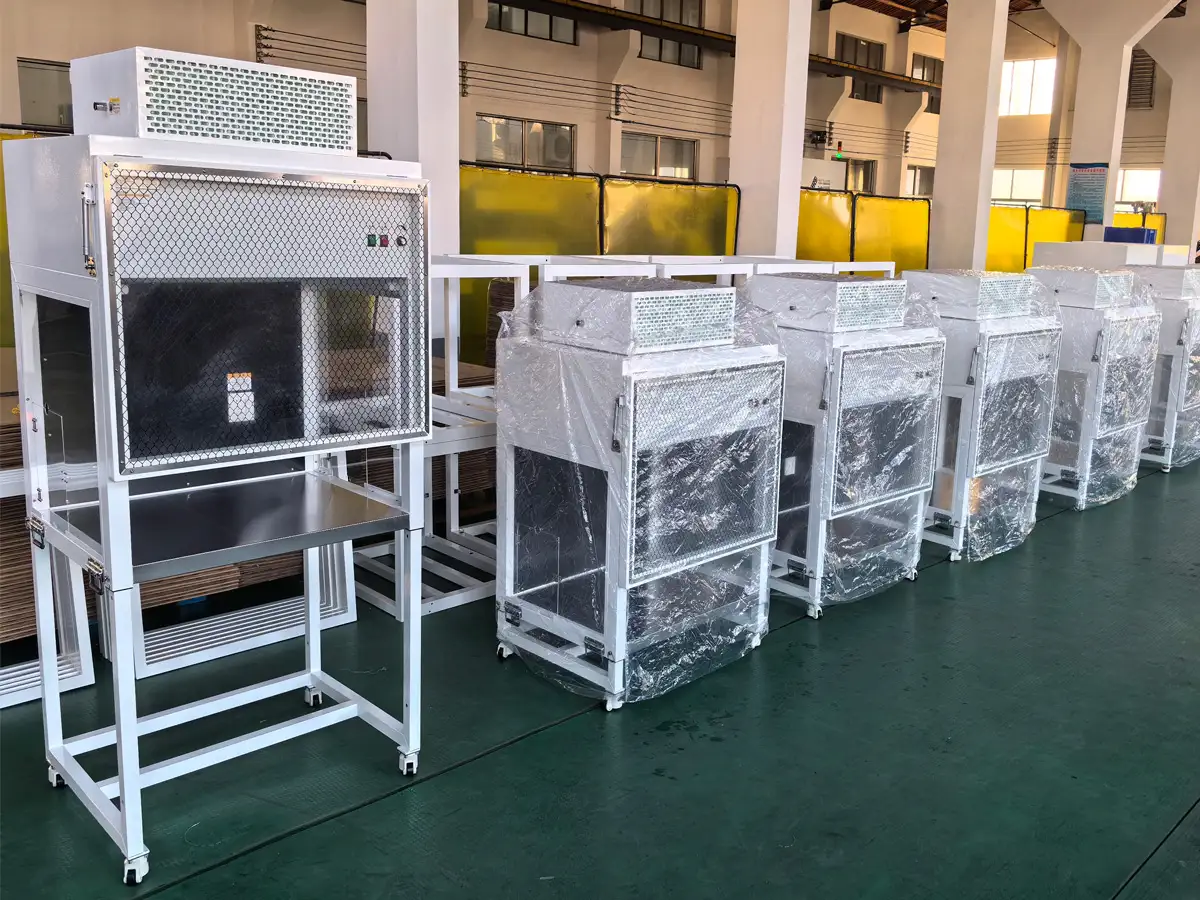
Finished mobile clean workbenches were checked after assembly to review appearance, structure, component fit, and readiness for packing. The finished units showed the completed workbench structure with protective doors, control areas, and caster-mounted bases.
Final inspection focused on confirming that each fabricated unit met the agreed structural, assembly, appearance, and delivery requirements.
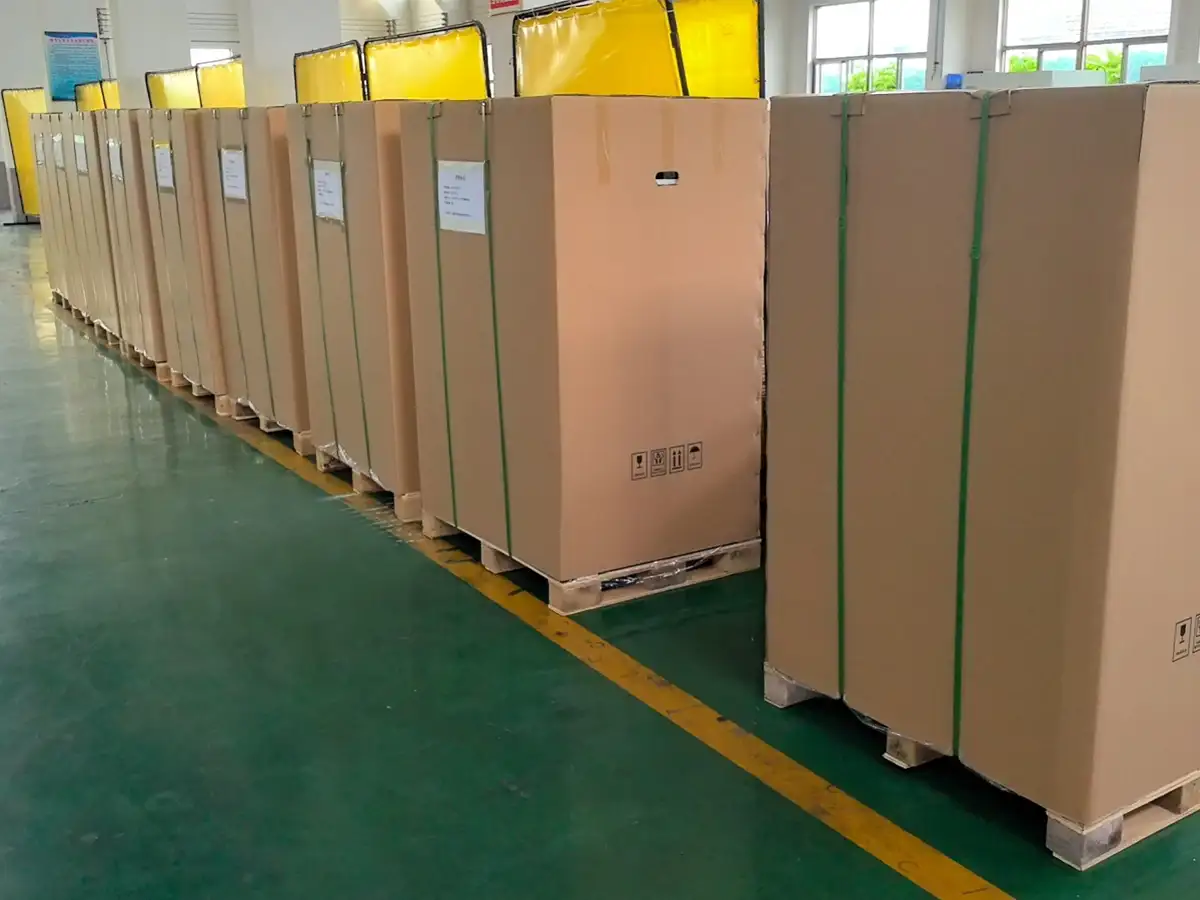
8. Export Packing and Delivery Readiness
The completed workbenches were packed for shipment using protective export packing. Proper packing helps reduce damage risk during handling, loading, and transportation.
For welded and assembled equipment, packing must protect both the metal structure and finished surfaces. Export-ready packing is an important final step because a well-made product still needs to arrive in usable condition. The finished workbenches were systematically packed before delivery.
Quality Control Points in This Project
Quality control for this product is built into the full production flow rather than left until the final stage. Material organization, cutting accuracy, fixture-based welding, weld review, coating preparation, assembly inspection, and packing review all contribute to repeatable quality.
Dimensional consistency was a key concern because the frame, doors, panels, casters, and internal components needed to fit together smoothly. Welding control was also important because frame distortion can affect the final product appearance and assembly accuracy. Surface finishing needed to provide a clean and consistent appearance, while protective packing was required to reduce damage risks during international transportation.
By managing these details at each production stage, Likai Metal helps overseas customers reduce common risks in custom metal equipment manufacturing, including inconsistent welds, assembly delays, surface finish defects, and shipping damage.
OEM Manufacturing Support
Custom mobile clean workbench manufacturing requires coordination across multiple fabrication processes. Likai Metal supports OEM customers with drawing review, material preparation, cutting, forming, welding, surface finishing, assembly, inspection, and export packing.
Customers who need custom fabricated equipment often require more than a single-process supplier. They need a manufacturing partner who can manage several production stages and communicate clearly about feasibility, production sequence, and quality risks. Likai Metal’s broader manufacturing capabilities support these projects from initial manufacturing review through final delivery.
This case also connects with other OEM fabrication work, such as the custom fabricated frame assembly case study, where welded frames, process control, and export delivery were also important. You can view more projects to explore additional manufacturing examples.
Need Custom Mobile Workbenches or Similar Industrial Equipment?
If you are sourcing custom mobile clean workbenches, welded equipment frames, sheet metal enclosures, or other OEM metal products, send us your drawings, material requirements, surface finish needs, and expected order quantity for an initial manufacturing review.
Likai Metal can help evaluate manufacturability, suggest a suitable production route, and support fabrication from cutting and welding to assembly and packing. Send us your drawings to discuss your next custom metal fabrication project.