
For many OEM metal fabrication projects, production does not end after cutting, bending, welding, or machining. After the main fabrication process is completed, the parts often need surface finishing, inspection, packing, and delivery preparation before they are ready for customer use.
This type of workflow is common for custom metal parts that require repeatable quality, stable batch production, and clear delivery planning. From semi-finished components to surface-treated parts ready for shipment, each stage affects the final quality of the project.
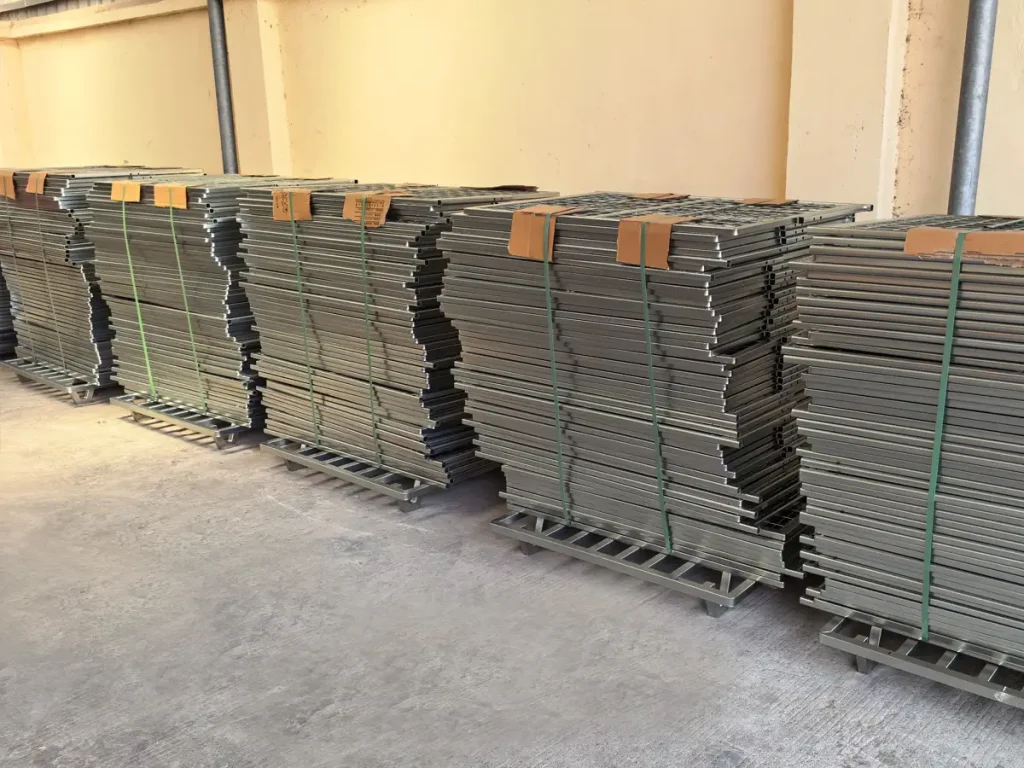
From Semi-Finished Parts to Finished Components
Semi-finished metal parts usually complete their main fabrication process first. Depending on the product design, this may include laser cutting, sheet metal bending, welding, frame assembly, CNC machining, or other fabrication steps.
Before surface treatment, parts should be checked for size, shape, weld condition, surface condition, and batch consistency. If the parts are frames, brackets, guards, panels, or welded assemblies, the supplier must also confirm that the structure is stable and suitable for the next finishing process.
For drawing-based OEM projects, this stage is important because dimensional or surface problems should be found before finishing. Once surface treatment is completed, rework may become more difficult and more costly.
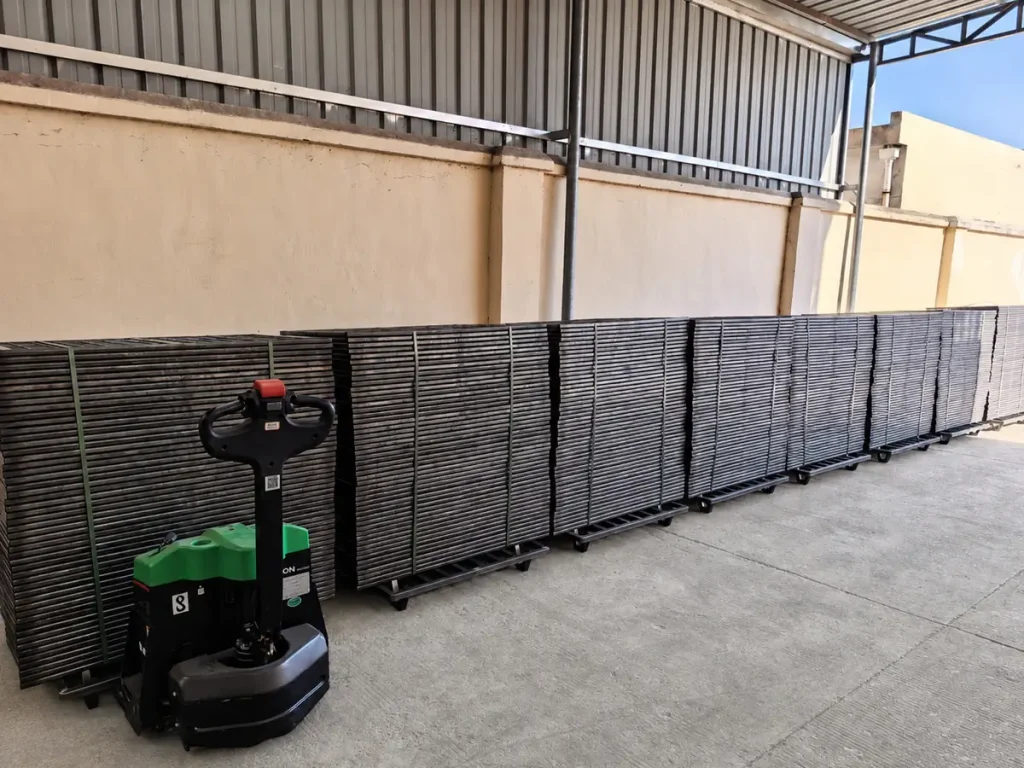
Why Surface Finishing Matters for OEM Metal Parts
Surface finishing is not only for appearance. For many custom metal parts, it also supports corrosion resistance, wear protection, cleaning requirements, assembly requirements, and final product presentation.
The actual finishing method depends on the material, product application, working environment, and customer requirements. Common requirements may include coating, plating, polishing, surface protection, or other finishing processes specified in the customer drawings.
For OEM buyers, clear finishing requirements help reduce misunderstanding during quotation and production. Useful information includes material grade, color requirement, surface standard, coating thickness, inspection requirement, packing method, and expected quantity.
Batch Production and Workshop Control
When a project moves from sample production to batch production, process control becomes more important. Parts must be arranged by batch, inspected consistently, and prepared for the next process without mixing different specifications.
In the workshop, Likai Metal supports custom metal parts through CNC machining, laser cutting, sheet metal bending, robotic welding, finishing coordination, assembly, and inspection. For welded frames or repeated metal components, fixtures and production routing help improve consistency from one batch to the next.
You can also review our metal fabrication capabilities and project examples to understand how different processes are organized for OEM manufacturing.
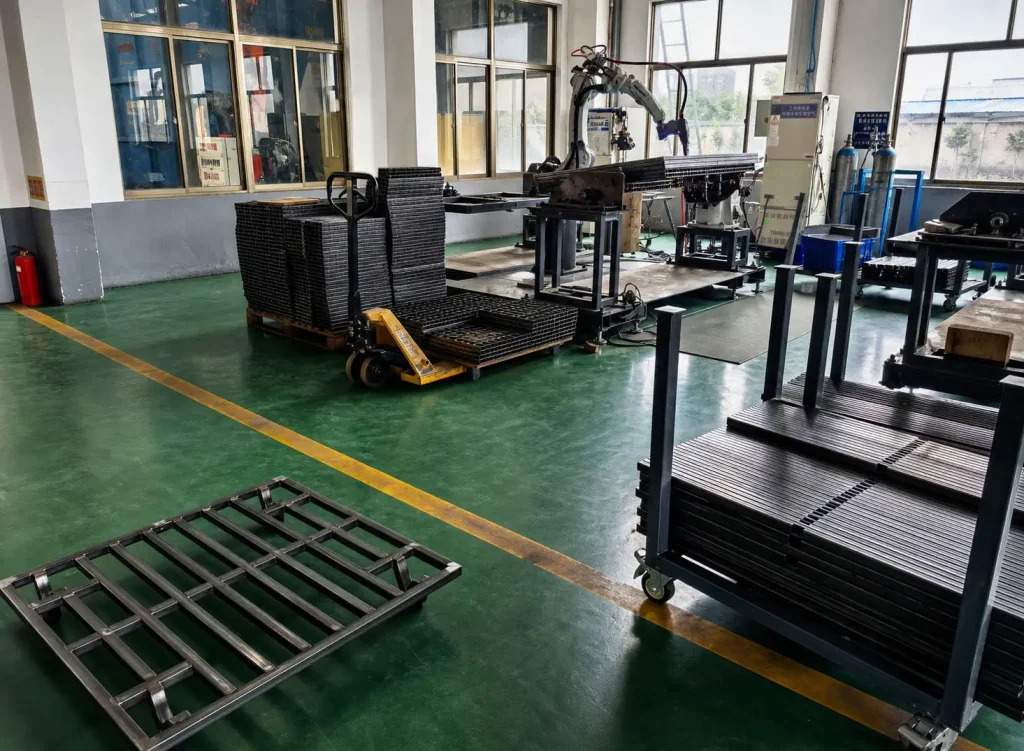
Inspection Before Packing and Delivery
Before packing, finished metal parts should be checked again. Inspection may include dimensional checks, visual surface checks, quantity confirmation, and packaging condition.
For batch delivery, parts are often stacked, bundled, protected, and arranged in a way that reduces damage during handling and transportation. Good packing is especially important for surface-finished parts, because scratches, impact marks, or poor stacking can affect final product quality.
For export or long-distance delivery, the packing method should match the product size, weight, surface condition, and shipping method.
Information Buyers Can Provide
To help us review your project more efficiently, buyers can provide:
- 2D drawings or 3D files
- Material and thickness requirements
- Surface finishing requirements
- Quantity and batch schedule
- Inspection standards
- Packing or delivery requirements
- Photos or samples if available
Clear project information helps us evaluate the manufacturing route, quotation, lead time, and possible production risks before production starts.
Custom Metal Parts for OEM Projects
Likai Metal supports custom metal fabrication projects based on customer drawings and technical requirements. Our capabilities include sheet metal bending, laser cutting, CNC machining, robotic welding, finishing coordination, assembly, and inspection.
If your project involves custom metal parts, welded frames, brackets, panels, guards, machinery components, or batch OEM production, you can send us your drawings and requirements for review.
Contact us to discuss your custom metal parts project and request a quotation.