
Laser cutting tolerances are an important part of designing custom sheet metal parts. A drawing may look simple, but the final part accuracy depends on material type, thickness, kerf width, hole size, heat input, machine condition, and how the part will be bent, welded, or assembled after cutting. Understanding these factors helps engineers design parts that are easier to manufacture, inspect, and repeat in production.
For OEM sheet metal parts, laser cutting tolerances are affected by material type, thickness, part size, hole diameter, slot width, kerf compensation, and edge quality requirements. Understanding these factors helps buyers design parts that are easier to cut, bend, weld, and inspect during production.
Before requesting a quote, buyers can provide DXF or DWG files, 2D drawings, material grade, thickness, tolerance notes, finish requirements, and expected quantities. Clear drawing information helps us review cutting feasibility, hole and slot accuracy, bending allowance, and downstream fabrication requirements.
At Likai Metal, laser cutting is usually the first step before bending, welding, surface finishing, and final inspection. If you need production cutting support, see our laser cutting services for sheet metal and tube parts.
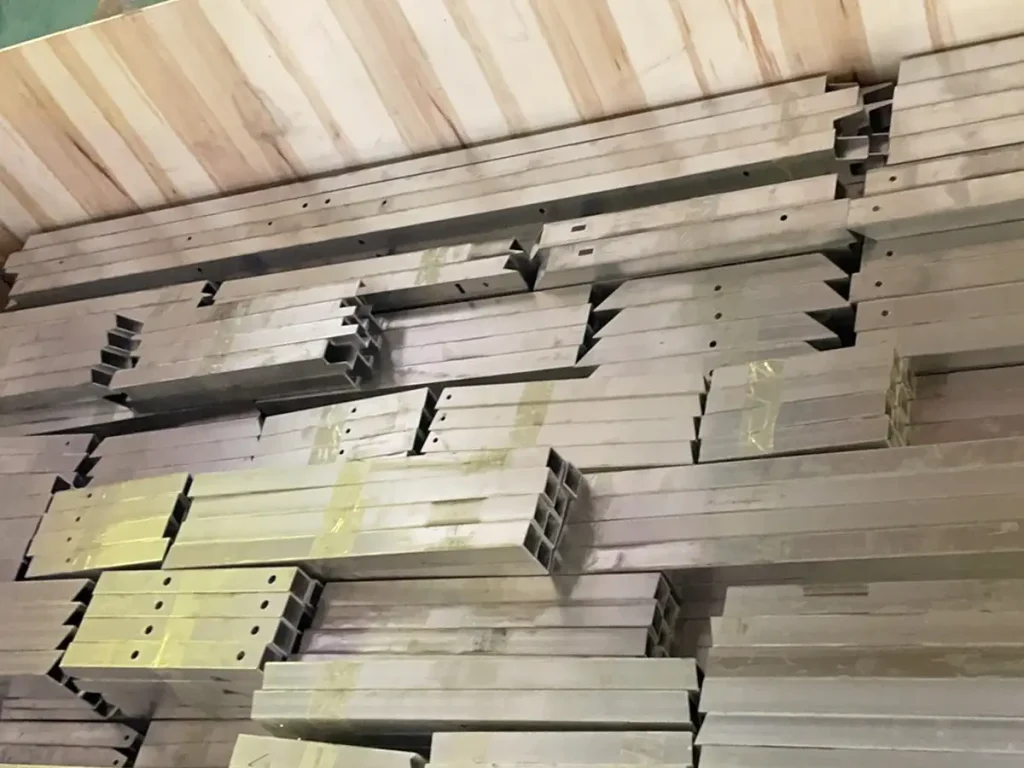
What tolerance can laser cutting achieve?
For many sheet metal parts, a practical laser cutting tolerance is often around +/-0.10 mm to +/-0.20 mm, depending on the material, thickness, part size, and feature geometry. Very thin sheet may hold tighter accuracy, while thicker plates, long profiles, narrow slots, and heat-sensitive materials may need a wider tolerance range.
It is better to define tolerances based on the function of the part instead of applying tight tolerances everywhere. Critical holes, mounting slots, mating edges, and assembly datums may need tighter control, while non-critical outside profiles can often use a more practical general tolerance.
Key factors that affect laser cutting tolerance
Several factors influence the final accuracy of laser cut sheet metal parts:
- Material type. Stainless steel, carbon steel, aluminum, and galvanized steel respond differently to heat and cutting gas.
- Material thickness. Thicker material usually requires more heat and slower cutting speed, which can increase variation.
- Kerf width. The laser removes a small amount of material along the cutting path, so kerf compensation must be considered.
- Part size. Large panels and long profiles may be affected by thermal movement and sheet flatness.
- Feature geometry. Small holes, narrow slots, sharp corners, and dense cut patterns are harder to hold consistently.
Design tips for better laser cutting accuracy
Good design makes laser cutting more stable and cost-effective. These guidelines are useful for most custom sheet metal projects:
- Keep hole diameters at least equal to the material thickness when possible.
- Avoid very narrow slots unless they are functionally required.
- Add small radii to internal corners to reduce stress and cutting difficulty.
- Use realistic tolerances for non-critical features.
- Mark critical dimensions clearly on the 2D drawing.
- Confirm whether dimensions apply before or after bending, welding, or finishing.
If the part will be bent after cutting, tolerance planning should include bend radius, bend allowance, and hole-to-bend distance. For more design guidance, read our sheet metal design guidelines.
Tolerance is not only a cutting issue
Many buyers focus only on laser cutting accuracy, but the final part tolerance is affected by every process after cutting. Bending can change hole positions, welding can introduce heat distortion, and surface finishing can slightly change dimensions or edge condition. For welded assemblies or formed sheet metal parts, the drawing should identify the final inspection condition.
This is why a complete manufacturing review is valuable before production. A factory should check material, thickness, cutting path, bend sequence, fixture needs, and inspection method together. You can also review our full metal fabrication capabilities to see how cutting connects with bending, welding, machining, and finishing.
What files should you send for a laser cutting quote?
To get an accurate quote, send a DXF or DWG file for the cutting profile, a PDF drawing with dimensions and tolerances, and a STEP file if the part includes bends or assembly relationships. Include material grade, thickness, quantity, surface finish, and any critical inspection requirements.
Clear files reduce back-and-forth communication and help the supplier quote faster. They also reduce the risk of tolerance misunderstandings before production begins.
Need laser cut sheet metal parts?
Likai Metal provides fiber laser cutting for custom sheet metal and tube parts from a real factory in China. We support OEM projects that require cutting, bending, welding, machining, finishing, and inspection. Send us your DXF, DWG, STEP, or PDF drawings and we will review your requirements and provide a fast quotation.
Laser cutting production support
For production planning, see our laser cutting services and metal fabrication capabilities. You can also send drawings for tolerance, material, and quotation review.