
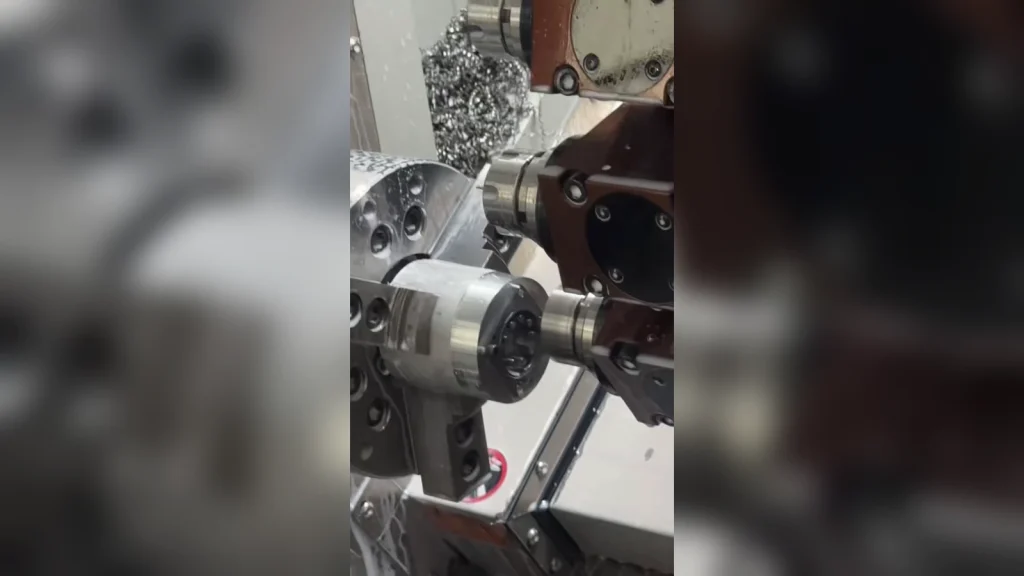
CNC machining plays an important role in custom metal manufacturing, especially for OEM projects that require stable dimensions, repeatable quality, and production based on customer drawings. For many metal parts, CNC machining is used to produce accurate features, holes, grooves, threads, and finished surfaces that are difficult to achieve with basic cutting or forming processes alone.
In custom manufacturing, CNC machining is not only about running a machine. It also involves drawing review, material selection, process planning, tooling setup, machining control, inspection, and communication with the customer. These steps help ensure that the finished parts meet the required specifications before delivery.
CNC Machining in Custom Metal Manufacturing
CNC machining is widely used for metal components in machinery, automation equipment, industrial systems, fixtures, brackets, connectors, and other OEM applications. Depending on the part design, the machining process may include turning, milling, drilling, tapping, boring, slotting, or finishing operations.
For custom metal parts, machining requirements are usually based on drawings, CAD files, tolerances, material specifications, and end-use conditions. Some parts require tight dimensional control, while others focus more on stable batch production, assembly fit, or surface quality.
Likai Metal supports drawing-based CNC machining projects as part of our broader custom metal fabrication capabilities. You can also review our CNC machining services to learn more about the types of machining work we support.
From Drawing Review to Machining Process
Before production starts, the technical team reviews the customer’s drawings and requirements. This step helps confirm the material, dimensions, tolerance requirements, machining features, surface requirements, quantity, and possible production risks.
For some parts, CNC machining may be used after laser cutting, welding, or sheet metal bending. For other parts, machining may be the main production process. The correct manufacturing route depends on the part structure, material, accuracy requirement, and batch size.
A clear process plan helps reduce mistakes during production. It also helps the supplier choose suitable tooling, clamping methods, machining sequence, and inspection points.
Why Precision and Repeatability Matter
For OEM metal parts, one good sample is not enough. Buyers usually need stable quality from one batch to the next. This is why CNC machining process control is important.
Repeatability depends on machine condition, tool selection, fixture stability, operator experience, and inspection standards. If the parts will be assembled with other components, small dimensional errors can affect the final product performance.
CNC machining helps improve consistency when the part design requires accurate holes, mating surfaces, threaded features, or controlled dimensions. For batch production, consistent process control can reduce rework and support more reliable delivery.
Combining CNC Machining with Other Fabrication Processes
Many OEM metal parts require more than one manufacturing process. A project may include laser cutting, sheet metal bending, welding, CNC machining, surface finishing, assembly, and final inspection.
For example, a welded frame or metal bracket may need CNC machining after welding to create accurate mounting holes or finished surfaces. A machined part may also require surface treatment or protective finishing before shipment.
You can review our metal fabrication capabilities and project examples to understand how different processes can be combined for custom metal parts.
Inspection After CNC Machining
Inspection is a key step after CNC machining. Depending on the drawing requirements, inspection may include dimensional checks, hole position checks, thread checks, surface condition checks, visual inspection, and quantity confirmation.
For custom parts, the inspection method should match the product requirements. Some projects require basic dimensional checking, while others may require more detailed inspection records or specific measurement standards.
Good inspection helps identify problems before packing and delivery. It also gives buyers more confidence when ordering custom metal parts from an overseas supplier.
Information Buyers Can Provide
To help us review CNC machining projects more efficiently, buyers can provide:
- 2D drawings or 3D files
- Material grade and size requirements
- Tolerance requirements
- Surface finishing requirements
- Quantity and batch schedule
- Inspection requirements
- Special assembly or packing requirements
- Photos or samples if available
Clear information helps us evaluate manufacturability, quotation, lead time, and possible production risks before starting the project.
Reviewing the main CNC machining quotation factors before sending an RFQ can help buyers define the production scope and reduce avoidable quoting assumptions.
Custom CNC Machining Support for OEM Projects
Likai Metal supports custom CNC machining and metal fabrication projects based on customer drawings and technical requirements. Our work can include CNC machining, laser cutting, sheet metal bending, robotic welding, surface finishing coordination, assembly, and inspection.
If your project involves custom machined parts, brackets, fixtures, machinery components, welded assemblies, or OEM metal parts, you can send us your drawings and requirements for review.
Contact us to discuss your CNC machining project and request a quotation.