
What is laser cutting? Laser cutting is a CNC-controlled process that uses a focused, high-power laser beam to cut sheet metal, tube, and plate with clean edges and accurate dimensions. The laser melts, burns, or vaporizes material along a programmed path, so custom shapes can be produced without physical tooling. This guide explains what laser cutting is, how it works, which materials it suits, and how buyers can use it for custom metal parts.
In OEM metal fabrication, laser cutting is often the first step before bending, welding, machining, surface finishing, or assembly. It is useful for brackets, panels, guards, housings, frames, and other custom sheet metal parts that require accurate profiles and repeatable production.
For a faster quote, buyers should provide DXF or DWG files for flat profiles, STEP files when the part includes bends or assemblies, and PDF drawings with material, thickness, tolerance, finish, and quantity requirements. Clear files help the supplier confirm cutting feasibility and plan the next fabrication steps.
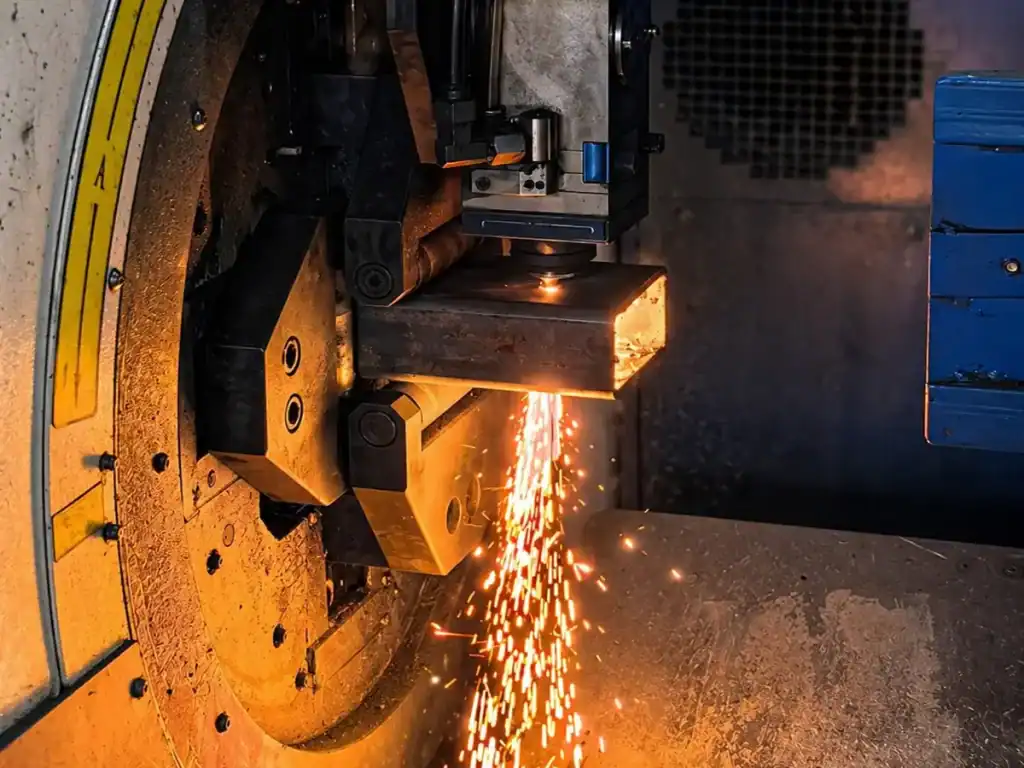
What is laser cutting and how does it work?
In laser cutting, a machine focuses a laser beam to a tiny, intense point on the material surface. The energy heats the metal until it melts or vaporizes, while a high-pressure assist gas (such as nitrogen or oxygen) blows the molten material out of the cut, leaving a narrow, clean kerf. Because the cutting path is controlled by a CNC program generated from your drawing, the same shape can be reproduced precisely, part after part.
Types of laser cutting
- Fiber laser cutting — the modern standard for metal. Fiber lasers are highly efficient and cut carbon steel, stainless steel, aluminum, brass, and copper quickly with excellent edge quality.
- CO2 laser cutting — older technology, better suited to non-metals such as acrylic and wood; less efficient on reflective metals.
- Tube and profile laser cutting — cuts round, square, and rectangular tube and structural profiles, ideal for frames and brackets.
Materials laser cutting works with
Fiber laser cutting handles carbon steel, stainless steel, aluminum, brass, and copper across a wide range of thicknesses commonly used for industrial sheet metal parts, enclosures, brackets, and structural components.
Advantages of laser cutting
- High precision and tight, repeatable tolerances
- Clean, burr-free edges that often need no secondary finishing
- No physical tooling, so design changes are fast and cheap
- Fast cutting speeds and efficient material nesting to reduce waste
- Easily cuts complex shapes and fine detail
Common applications
Laser cutting is used to make sheet metal brackets, enclosures and housings, equipment panels, structural frames, machine guards, and a wide range of custom OEM metal parts. It is frequently the first step before bending, welding, and finishing in a complete metal fabrication workflow.
Laser cutting as part of full fabrication
Laser cutting rarely stands alone. Most custom parts move from cutting to bending, welding, and finishing. Having all of these processes under one roof avoids handoff delays and keeps quality consistent — the basis of build-to-print manufacturing.
When should you choose laser cutting?
Laser cutting is a strong choice when a part needs accurate profiles, repeatable holes, slots, tabs, or detailed outlines. It is especially useful for low-volume prototypes, medium production runs, and custom OEM parts because there is no hard tooling cost. Once the drawing is ready, the same CNC program can be used again for repeat orders.
For sheet metal projects, laser cutting is often combined with press brake bending, tapping, welding, and surface finishing. This makes it suitable for brackets, panels, guards, enclosures, mounting plates, machine covers, frames, and many other fabricated metal parts.
Laser cutting tolerances and design tips
Laser cutting tolerances depend on material type, thickness, part size, machine setup, and the feature being cut. Small holes, thin bridges, sharp inside corners, and very tight slots may need design review before production. For practical design guidance, see our article on laser cutting tolerances for sheet metal parts.
To get a better result, send DXF, DWG, or STEP files together with material grade, thickness, quantity, finish requirements, and any critical dimensions. Clear drawings help the manufacturer confirm kerf, hole size, edge quality, and inspection requirements before cutting starts.
Limitations of laser cutting
Laser cutting is highly flexible, but it is not the best process for every feature. Very thick plates, deep countersinks, precision 3D surfaces, and threaded features may need machining, drilling, tapping, or another secondary process. In many custom metal projects, laser cutting creates the flat profile first, then other processes finish the final part.
Looking for reliable laser cutting services?
Likai Metal provides fiber laser cutting services for sheet metal and tube from a real factory in China, serving OEMs across North America and Europe. Send us your DXF or STEP files for a fast quote.
Laser cutting for OEM metal parts
For sheet metal or tube cutting projects, review our laser cutting services, broader manufacturing capabilities, and custom metal parts project examples.