
How much does CNC machining cost? There is no single price tag — the cost of a CNC machined part depends on the material, the complexity of the design, the quantity you order, the tolerances and finishes you require, and how much machine time and setup the job takes. This guide breaks down what drives CNC machining cost in 2026, how parts are priced, and practical ways to lower your per-part cost without sacrificing quality.
For custom OEM metal parts, machining cost is rarely based on part size alone. A small part with tight tolerances, deep pockets, threaded holes, or multiple setups can cost more than a larger but simpler component. Material grade, batch quantity, inspection requirements, and surface finish also affect the final quote.
The best way to reduce quoting uncertainty is to send a complete drawing package. Include 2D drawings, 3D files, material, tolerance notes, finish requirements, quantity, and any critical inspection points. This allows the supplier to review manufacturability and suggest cost-saving changes before production starts.
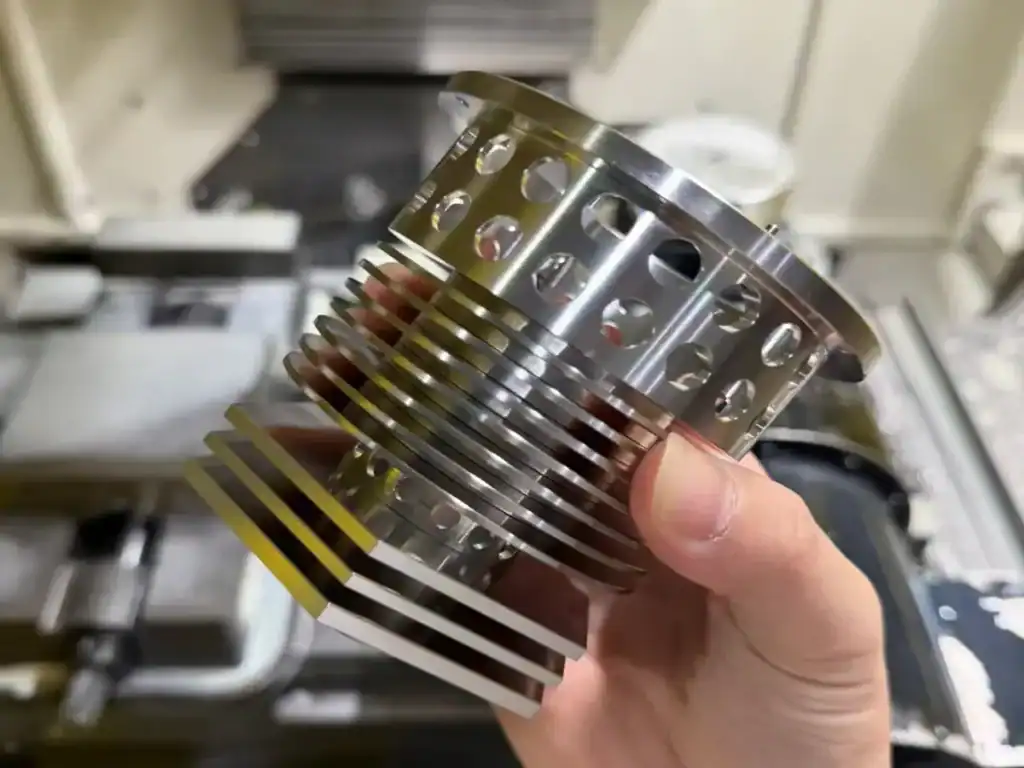
What affects CNC machining cost?
Six factors account for most of the price of a CNC machined part:
- Material. 6061 aluminum is generally the most affordable and easy to machine. Stainless steel, tool steel, and titanium cost more because they are harder, wear tooling faster, and cut more slowly. Engineering plastics vary by grade.
- Part complexity. More features, tight internal corners, deep pockets, multi-axis geometry, and thin walls all add machining time and programming effort — and therefore cost.
- Quantity and volume. CNC machining carries a fixed setup and programming cost. Ordering 100 parts is far cheaper per unit than ordering one, because that setup is spread across the whole run.
- Tolerances and surface finish. Standard tolerances are cheapest. Calling out tight tolerances or fine finishes only where you truly need them keeps cost down. Coatings such as anodizing, plating, and powder coating add cost.
- Machine time and setup. Actual cutting time, the number of setups and re-fixturing steps, and tool changes drive a large share of the price. A part needing 5-axis machining or several setups costs more than a simple 3-axis part.
- Lead time. Rush orders cost more; standard lead times are the most economical.
How CNC machining is priced
Most CNC machining quotes combine two things: a one-time setup and programming cost, and a per-part machining cost. On a prototype or small batch, the setup cost dominates, so unit prices look high. As volume rises, that setup is spread across more parts and the per-unit price drops sharply. This is exactly why a supplier asks for your quantity before quoting — the same part can have very different unit costs at 10 pieces versus 1,000.
What determines the final CNC machining quotation?
A CNC machining quotation reflects the complete production route, not only cutting time. Part and stock size affect raw-material use, machine selection, and handling. Geometry and tool access determine whether features can be reached directly or require additional setups and machining operations. Batch quantity changes how programming, setup, and fixture costs are distributed across parts. Workholding may use standard vises and fixtures, while unusual shapes can require dedicated support. Standard tooling is generally easier to plan than special cutters or custom tools. Inspection scope and required documentation add review and reporting work. Secondary processes such as heat treatment or surface finishing must also be coordinated after machining. If the supplier is responsible for assembly, those steps should be defined before quotation. Packaging and labeling requirements—especially part separation, protective materials, identification, and batch control—also affect the final production plan and quoted cost.
How to reduce your CNC machining cost
You may be able to reduce machining cost through a few design and ordering choices:
- Simplify the design where function allows, and avoid unnecessarily complex features.
- Specify standard tolerances except on the dimensions that are truly critical.
- Choose a cost-effective material (for example 6061 aluminum instead of stainless) where your application allows.
- Order in larger batches to amortize the setup cost.
- Skip surface finishes you do not need.
- Send a clear 2D drawing and 3D model so the supplier does not pad the quote for uncertainty.
A good manufacturer will review your drawing and suggest design-for-manufacturing changes that lower cost — see our guide to build-to-print manufacturing for how that process works.
Why CNC machining in China is cost-competitive
China-based CNC machining can be cost-competitive for OEM projects because machining, material sourcing, secondary processing, and export coordination may be available within an established supply network. The result depends on part complexity, quantity, quality requirements, logistics, and supplier capability, so buyers should compare the complete landed scope rather than assuming the lowest unit price. Our guide on how to source CNC parts from China explains how to vet a supplier safely.
How to get an accurate CNC machining quote
For a quotation that reflects the intended production route, provide:
- A 2D drawing in PDF or DWG format, showing critical dimensions and tolerances
- A 3D CAD model in STEP or IGES format
- The material specification and grade, including stock form when relevant
- Order quantity, batch size, and expected annual volume if known
- Critical tolerances and functional or assembly relationships
- Surface treatment or finish requirements
- Heat treatment requirements, if applicable
- Inspection and documentation requirements
- Assembly requirements and any supplied or purchased components
- Packaging, part-separation, labeling, and lot-identification requirements
- The requested delivery schedule and any batch-delivery requirements
Get a CNC machining quote
Likai Metal provides custom CNC machining services from a real factory in China, serving OEMs across North America and Europe. Send us your drawings and requirements for a project-specific quotation.
If you are comparing supplier responsibilities before requesting a quote, see our guide to build to print vs build to spec manufacturing for OEM metal parts.
CNC machining quotation resources
To move from cost planning to production, see our CNC machining services, review OEM metal parts project examples, or send drawings for a quotation.