
MIG and TIG are the two most common welding processes for custom metal parts — and choosing the right one affects the strength, appearance, speed, and cost of your weldments. Both join metal using an electric arc, but they work differently and suit different jobs. This guide explains how MIG and TIG welding compare, and how to decide which is right for your project.
For OEM metal parts, MIG and TIG welding are selected based on material type, thickness, appearance requirements, weld strength, production quantity, and inspection standards. MIG welding is often suitable for efficient batch production, while TIG welding is commonly used when cleaner weld appearance and more controlled heat input are required.
Before quotation, buyers can provide 2D drawings, STEP files, material grade, thickness, weld position, surface finish requirements, expected quantity, and inspection standards. Clear welding information helps us choose the suitable welding process, review fixture needs, control distortion, and prepare stable production plans.
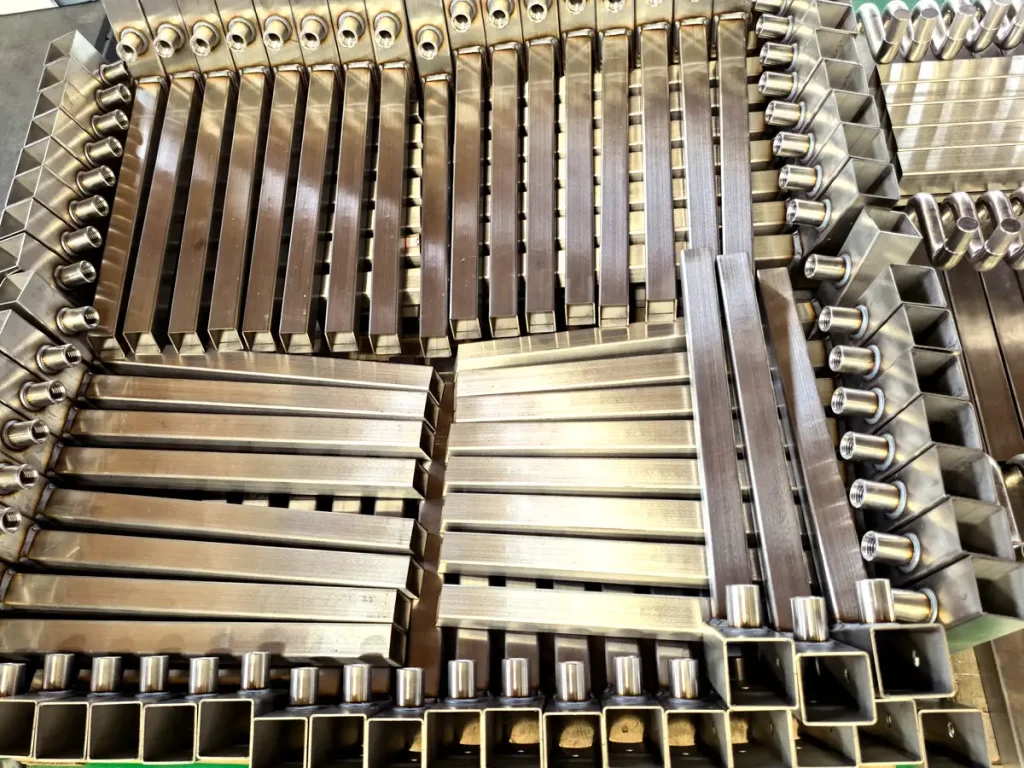
What is MIG welding?
MIG welding (GMAW, gas metal arc welding) feeds a continuous wire electrode through a gun while shielding gas protects the weld. The wire acts as both the electrode and the filler, which makes MIG fast and relatively easy to learn. It works well on thicker materials and is the go-to process for high-efficiency batch production of frames, brackets, and structural assemblies.
What is TIG welding?
TIG welding (GTAW, gas tungsten arc welding) uses a non-consumable tungsten electrode, with filler metal added separately by hand. It gives the welder fine control, producing clean, precise, high-quality welds. TIG excels on thin materials and on metals like stainless steel and aluminum where weld appearance and integrity matter — but it is slower and requires more skill.
MIG vs TIG: key differences
- Speed: MIG is faster and better for production volume; TIG is slower and more deliberate.
- Appearance: TIG produces cleaner, more precise welds; MIG welds are strong but less refined.
- Material thickness: MIG handles thicker sections easily; TIG is ideal for thin material.
- Metals: Both weld steel; TIG is often preferred for stainless steel and aluminum where finish matters.
- Skill and cost: MIG is easier and generally lower cost; TIG demands more skill and time, so it costs more.
- Automation: Both can be robotic for consistent, repeatable welds at scale.
When to choose MIG
Choose MIG for production runs, thicker steel, structural frames and brackets, and projects where speed and cost matter more than a flawless weld bead. It is the workhorse for high-volume OEM weldments.
When to choose TIG
Choose TIG for thin materials, stainless steel and aluminum parts, visible welds, and applications that demand precision and a clean appearance — such as enclosures, food-grade equipment, and high-spec assemblies.
Robotic MIG and TIG welding
For batch production, both MIG and TIG can be automated. Robotic welding delivers repeatable weld quality across large runs — see our comparison of robotic vs manual welding for when automation makes sense.
Which is right for your project?
If you are unsure, send us your drawings and requirements — we will recommend the right process for your part, material, and volume. Likai Metal provides MIG, TIG, and robotic welding services for custom metal parts and OEM assemblies from a real factory in China. Send us your drawings for a quote within 24 hours.
Welding support for OEM assemblies
For welded frames, brackets, and housings, review our robotic welding services, see OEM project examples, or send your drawings for a production quote.